
Live Betting Tracker: In-Play Momentum & Real-Time Data
 Available in US
 Available in US
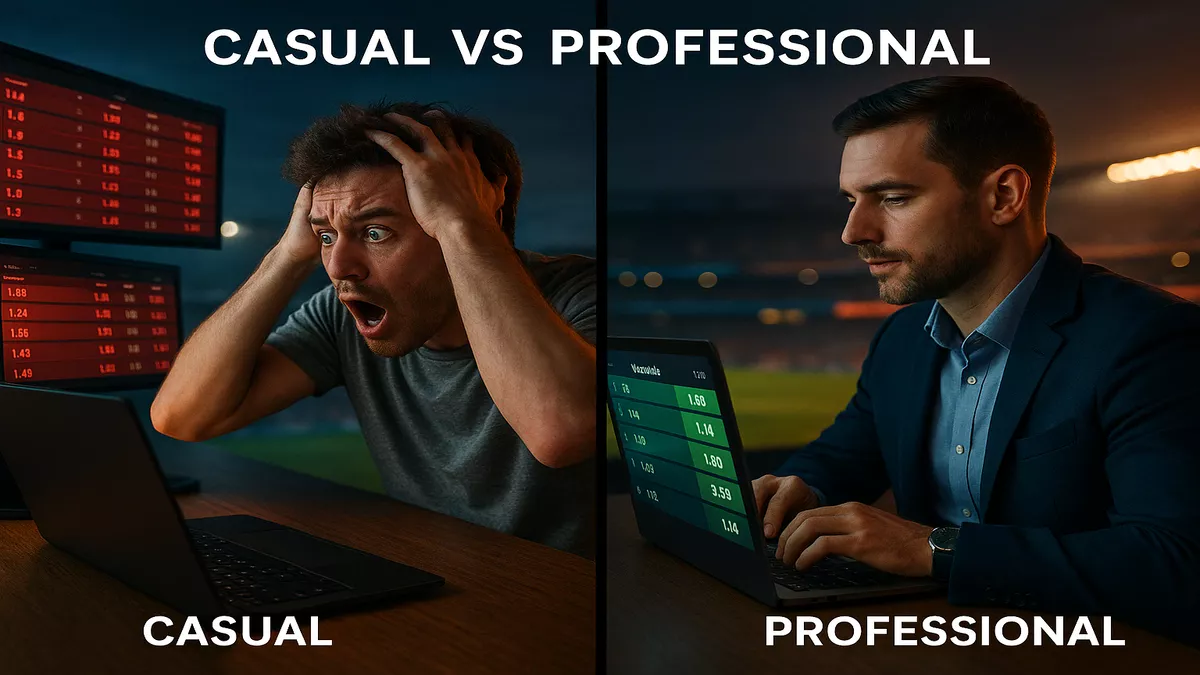
Live betting is where most casual bettors lose money fastest and where disciplined bettors find their biggest edges. The difference comes down to whether you’re reacting emotionally to what just happened or capitalizing on how the market overreacts to short-term variance. That fumble everyone just watched doesn’t change the team’s underlying quality, but it might swing the odds dramatically for thirty seconds before sharp money corrects them.
The appeal of live betting is obvious you’re watching the match unfold, you can see momentum shifts and tactical adjustments, and the odds update constantly creating apparent opportunities. The danger is that these advantages are mostly illusion. What feels like superior information from watching is often just hindsight bias making random outcomes seem predictable. The constantly updating odds create action bias where you bet because you can, not because value exists.
Professional live bettors approach in-play markets completely differently than recreational ones. They prepare extensively before matches start, identifying specific scenarios where they expect the market to misprice odds. They watch prepared to act on those scenarios while otherwise doing nothing, no matter how compelling the action looks. They bet less frequently than casual live bettors but at much higher expected value because they’re selective rather than reactive.
This isn’t about reflexes or getting bets down faster than others, though timing helps. It’s about understanding how live markets behave, which events trigger predictable overreactions, what information actually changes true probability versus what just feels significant, and having the discipline to wait for genuine edges rather than manufacturing reasons to bet every match you watch. Master these elements and live betting becomes one of the most profitable approaches available. Ignore them and you’re just gambling with extra steps.
Live Momentum Analysis: Quantifying the ‘Next Goal’ Edge
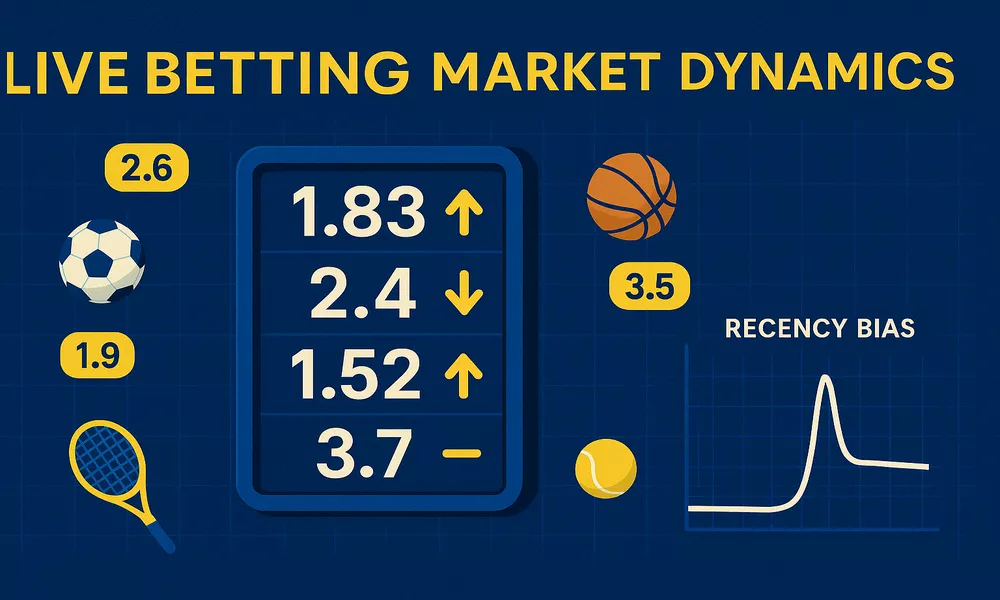
Live betting odds move constantly based on match events, betting volume, and algorithms trying to balance bookmaker exposure. Understanding what drives these movements reveals where inefficiencies hide and when the market is pricing outcomes accurately versus overreacting to noise.
The fundamental dynamic is that bookmakers need to manage their risk in real-time while markets lack the liquidity and efficiency of pre-match betting. Pre-match, markets have hours or days to incorporate all available information and sharp money hammers away mispriced lines until they correct. Live, everything happens in seconds. The algorithms updating odds can’t perfectly account for context around every event, creating temporary mispricings that disappear quickly but exist long enough for prepared bettors to exploit.
Recency bias dominates live betting more than any other market. The team that just scored a goal sees their odds shorten dramatically even though one goal changes win probability less than the odds movement suggests. Conversely, the team that conceded sees their odds lengthen beyond what’s justified. The market treats the most recent event as more important than everything that happened previously, which is psychologically natural but mathematically wrong.
This overweighting of recent events creates systematic opportunities. When a team concedes against the run of play perhaps through a defensive error or a wonder strike their odds drift despite the underlying match dynamics still favoring them. The goal happened, but it didn’t mean the opponent suddenly became better or the match flow reversed. Sharp live bettors recognize these situations and bet the team that conceded because the market overreacted to a single event.
Momentum is the most cited and least meaningful concept in live betting. Commentators endlessly discuss which team has momentum, and casual bettors bet based on perceived momentum shifts. The reality is that momentum is mostly retroactive narrative we call it momentum when a team succeeds multiple times in succession, but the successes are often independent events being lumped together into a pattern that doesn’t exist.
The few situations where momentum arguably matters are psychological. A team that scores twice in quick succession might genuinely gain confidence that translates to better decision-making and higher effort. A team that concedes twice quickly might become demoralized or panicked. These effects are real but inconsistent and much smaller than live betting odds suggest. Most of what looks like momentum is just variance clustering randomly, and regression to the mean is coming regardless.
Market correction speed varies by sport and event importance. Major matches in popular leagues see odds correct almost instantly when sharp bettors identify mispricings. Smaller matches or niche sports might have inefficiencies that persist for minutes rather than seconds because fewer sophisticated bettors are watching. Understanding which markets correct quickly versus slowly helps you choose where to focus live betting efforts.
The algorithms driving live odds have improved dramatically over recent years, making many obvious edges disappear. Bookmakers learned that goals cause predictable betting patterns, so they now overcompensate when goals happen to avoid getting hammered by sharps. This means the opportunities that existed five years ago might not exist today, and successful live betting requires constantly adapting to how markets evolve.
Liquidity matters more in live betting than pre-match. You might identify an edge but find that maximum stakes are severely limited, or that getting your bet matched takes so long that the odds have moved before your bet is confirmed. High-liquidity bookmakers and betting exchanges offer better execution but might also correct mispricings faster. This tradeoff requires balancing where you’re most likely to find edges versus where you can actually bet meaningful amounts.
The key insight is that live betting isn’t about predicting what will happen next it’s about identifying when current odds don’t reflect true probability based on everything that’s happened so far. You’re betting that the market has mispriced the situation, not that you can forecast the future better than anyone else. This framing prevents the trap of thinking you have predictive powers just because you’re watching the match.
Pre-Match Preparation for Live Betting Success
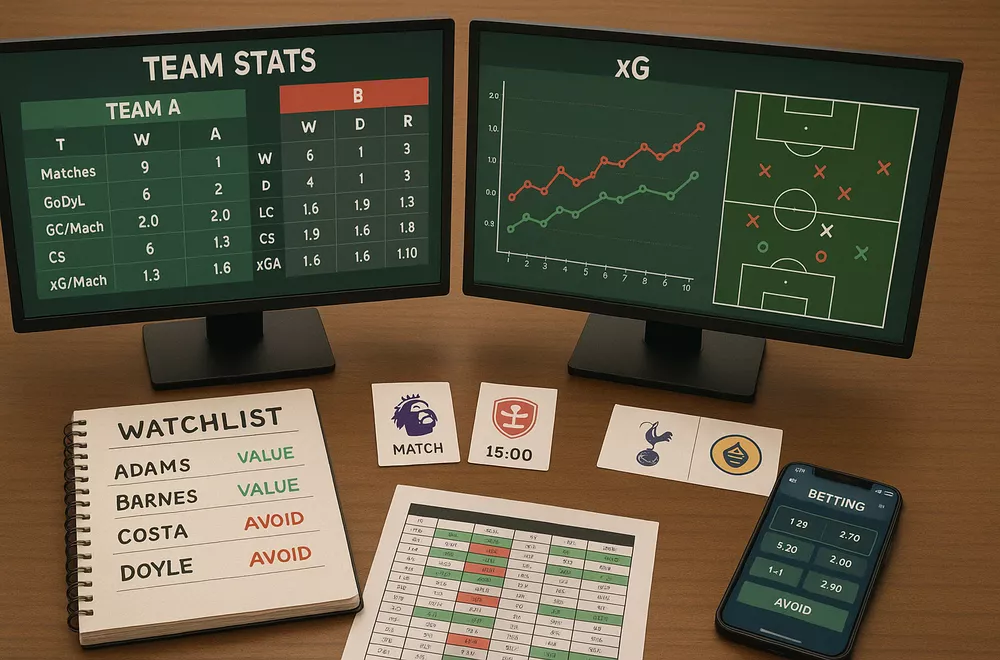
The bettors making money on live betting do most of their work before matches start. They’re not reacting in the moment they’re executing plans they developed while thinking clearly, identifying specific scenarios where they expect the market to misprice odds, and waiting patiently for those scenarios to materialize.
Match selection comes first. You can’t watch every match, so choose where to focus based on where you expect the best opportunities. Matches between teams with clear quality differentials often create value when the underdog scores first and their odds shorten beyond what’s justified. Matches between evenly-matched teams might create value when one team goes ahead and the market overreacts to a one-goal lead that’s essentially meaningless.
Understanding each team’s typical match patterns reveals what to expect. Some teams start slowly and improve after halftime as fitness advantages emerge. Others start aggressively but fade late as superior opponents adjust tactically. Teams that frequently concede first but come back strong offer value when they go behind because the market treats all first goals equally without accounting for specific team response patterns.
Statistical preparation means knowing key metrics before kickoff. What’s each team’s xG for and against over recent matches? What’s their record when scoring first versus conceding first? How do they perform when trailing at halftime? This data informs which scenarios present value rather than requiring you to calculate everything live when time pressure prevents clear thinking.
Tactical understanding reveals which adjustments are likely. If a possession-based team goes behind, they’ll probably push more players forward and increase attacking intensity, creating counter-attacking opportunities for opponents. If a defensive team goes ahead early, they’ll likely sit deeper and look to protect their lead, potentially making the match lower-scoring than pre-match expectations suggested. Anticipating these adjustments lets you identify value before the market fully prices them.
Managerial tendencies matter for predicting substitutions and tactical changes. Some managers are proactive, making changes early when the initial plan isn’t working. Others are reactive, waiting too long to adjust and allowing matches to drift away. Some managers have predictable substitution patterns based on match state and time remaining. This knowledge helps you anticipate how matches will unfold rather than just reacting to what happened.
Creating a watchlist of specific scenarios prevents emotional decision-making during matches. Your pre-match analysis might identify that if Team A scores first, their odds will shorten too much given that they tend to sit back and invite pressure after taking leads. You’re prepared to bet Team B if that scenario occurs. Without this pre-planning, you might make the opposite mistake and bet Team A because they just scored and look good.
The key scenarios worth preparing for include goals changing match state, red cards dramatically shifting the balance, injuries to key players affecting team quality, and tactical adjustments that aren’t immediately obvious to casual observers. For each scenario, determine what you’d expect to happen and what odds would represent value. This preparation takes ten minutes before the match but provides clarity during the chaos of live betting.
Bankroll allocation for live betting should be predetermined. Decide before matches how much you’re willing to risk on live bets for that match or session. This prevents the trap of chasing losses where you keep betting trying to recover from earlier mistakes. The predetermined limit enforces discipline when emotions run high during tight matches.
Setting alerts for specific odds thresholds works if your bookmaker offers this feature. Maybe you’ve identified that if Team A’s odds drift to 2.50 or higher, they’re undervalued based on underlying quality. Set an alert so you’re notified if those odds appear rather than staring at odds movements for ninety minutes. This automation reduces mental strain and prevents missing opportunities.
Sport-Specific Live Betting Strategies
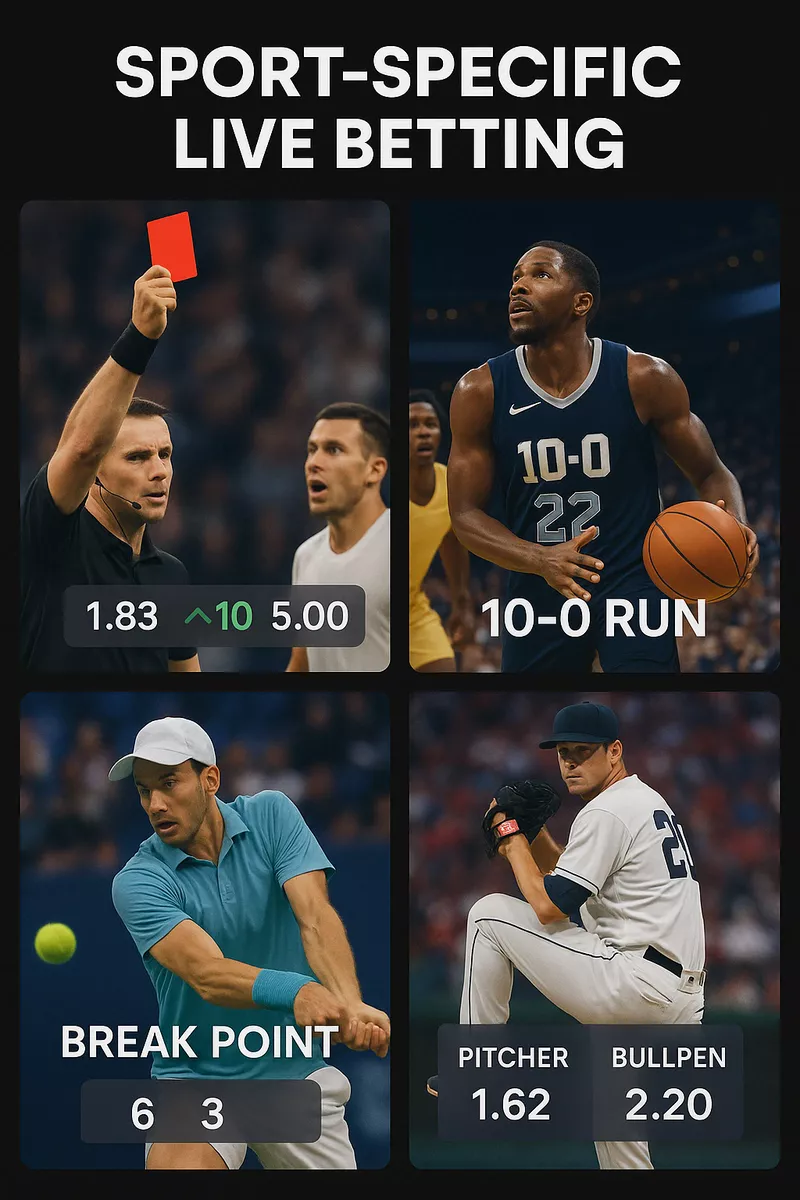
Live betting dynamics vary dramatically across sports based on scoring frequency, pace of play, and how quickly momentum can shift. What works for football fails in basketball and vice versa. Understanding sport-specific patterns is essential for identifying where edges exist.
Football live betting centers on goals and how they change match dynamics. The first goal is the most significant event in most matches because it forces the trailing team to open up and attack, creating space for the leading team to exploit. This dynamic is predictable enough that the market prices it reasonably well, but opportunities exist when goals come against the run of play or through fluky circumstances.
The key football insight is that score effects are massive. When a team goes ahead, they typically become more conservative regardless of their normal style. This creates higher expected goals for the trailing team paradoxically, because they’re attacking with more urgency while the leading team invites pressure. Matches that are 1-0 at halftime often see the trailing team dominate the second half statistically even if they don’t equalize.
Red cards in football are the most dramatic live events and create huge odds swings. A team reduced to ten men faces massive disadvantage, but the market often overreacts to the card itself without properly considering match context. If the red card comes when the team is already 2-0 ahead with twenty minutes left, their chances of holding the lead remain high. If the card comes at 0-0 early, it’s devastating. The same event gets different reactions from the algorithm but should get different reactions from you based on context.
Basketball live betting is completely different because scoring is continuous and frequent. Individual possessions matter less because there are a hundred more coming. The key is understanding that leads mean less in basketball than any other sport a ten-point lead can evaporate in two minutes. This creates live betting value when the market overreacts to moderate leads, especially in the second and third quarters.
Run patterns in basketball are predictable enough to exploit. Teams go on 10-0 runs regularly without any change in underlying quality it’s just variance clustering. The team on the wrong end of the run sees their odds drift beyond fair value. If you’ve done pre-match preparation and know the trailing team is actually the better side, these runs create clear buying opportunities before natural regression occurs.
Foul trouble creates predictable impacts in basketball. A star player picking up three fouls in the first half means they’ll likely sit extended time in the second half, weakening the team measurably. The market prices this when it happens, but not always fully. Similarly, when that player returns with fouls to spare in the fourth quarter, their team improves but the odds might not fully adjust if attention is elsewhere.
Tennis live betting is unique because matches are subdivided into sets, games, and points, each with psychological significance. The most exploitable dynamic is that losing a set doesn’t change match probability nearly as much as odds suggest in best-of-five matches. The better player losing the first set to a weaker opponent sees their odds drift dramatically, but they’re still heavily favored to win the match. Their odds often present value if their underlying quality advantage remains clear.
Break point conversion and hold rates in tennis reveal genuine skill rather than variance. A player consistently failing to convert break points might be underperforming temporarily due to nerves or poor decisions, suggesting they’re better than current match score indicates. A player holding serve easily despite losing suggests they’re not far from turning the match around. These patterns aren’t visible in simple set scores but predict outcomes better.
Baseball live betting centers on pitcher matchups and bullpen quality. The starting pitcher’s effectiveness determines early innings, but once they’re removed, the matchup shifts entirely. A team might be losing but has vastly superior bullpen, making a comeback more likely than the score suggests. The market prices this somewhat but not always fully, especially in the middle innings when most attention is on the current score rather than likely pitching changes.
American football live betting focuses on possessions and score differential relative to time remaining. A touchdown lead with five minutes left is much more valuable than the same lead with fifteen minutes left because clock becomes a factor. The market prices this, but opportunities exist when touchdowns happen at specific times that shift the math. A touchdown making it 14-7 with two minutes left in the half is less valuable than the same score early in the third quarter.
The commonality across sports is that the market overreacts to recent events and underweights underlying quality. When variance creates outcomes that don’t match true team quality, odds shift beyond fair value temporarily. Recognizing these situations across different sports lets you specialize in live betting rather than being competent but not expert across all betting types.
Timing and Execution in Live Markets
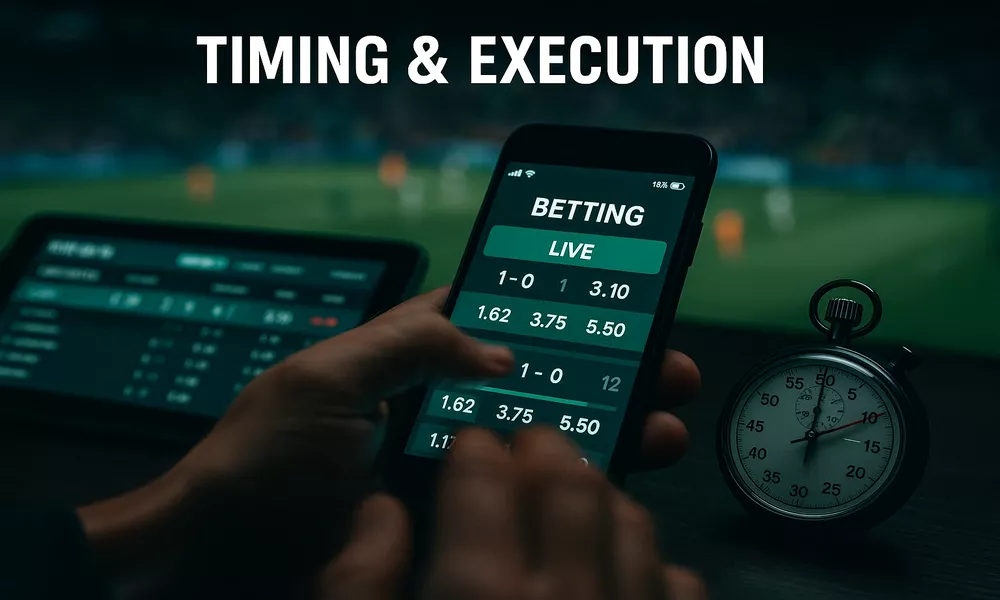
Having identified a live betting edge means nothing if you can’t execute it properly. Timing matters critically because odds update constantly and windows of opportunity might last seconds. The technical and psychological aspects of execution separate successful live bettors from those who understand theory but can’t implement it.
Speed of execution requires technical preparation. Use betting apps rather than websites because they’re faster to load and place bets. Have accounts at multiple bookmakers so if one doesn’t offer the odds you want, you can check others instantly. Pre-fund accounts so you’re not waiting for deposits when opportunities appear. These small technical advantages compound into being able to capture value that disappears before slower bettors can act.
The psychological challenge is maintaining discipline while odds flash constantly and matches unfold dramatically. Your brain wants to bet because betting is why you’re watching. Fighting this action bias is brutally hard. You see odds that look good and convince yourself there’s value when really you’re just manufacturing reasons to bet. The counter is ruthless adherence to your pre-match plan if a scenario isn’t on your watchlist, you don’t bet it regardless of how compelling it seems in the moment.
Stake sizing in live betting should generally be smaller than pre-match bets because your edge is smaller and the information is less complete. You’re betting that the market mispriced something temporarily, but you could be wrong about what information matters or the market might be reacting to something you haven’t noticed. Conservative stakes protect bankroll while still capitalizing on edges that exist.
The exception is when you have very high confidence based on preparation. If your pre-match analysis identified a specific scenario that represents clear value and that scenario occurs exactly as expected, betting a normal or even slightly elevated stake makes sense. But this should be rare most live bets should be smaller exploratory bets rather than huge positions.
Cash-out features offered by many bookmakers are usually bad value because the bookmaker builds in a margin. If you can cash out for a profit, that profit is less than the fair value of letting your bet run. The times to consider cashing out are when your initial reasoning was clearly wrong maybe you bet based on a factor that turned out to be irrelevant, or new information emerged that changes the situation fundamentally.
Managing multiple bets across matches creates complexity. Professional live bettors often watch several matches simultaneously, which seems insane but works when you’re not trying to follow every moment. You’re monitoring for specific scenarios on your watchlist rather than watching every play. Use multiple screens, keep betting apps open and logged in, and focus on the matches where your identified scenarios are most likely to materialize.
The mental fatigue from live betting is real and underestimated. Making quick decisions repeatedly under time pressure drains cognitive resources fast. After two hours of intense live betting, your decision quality deteriorates even if you don’t realize it. Taking breaks prevents costly mistakes from mental exhaustion. Better to miss some opportunities than to make terrible decisions because you’re tired.
Record keeping for live bets should include match state when you placed the bet, your reasoning, and how the situation evolved afterward. This information reveals whether your live betting edges are real or imagined. Maybe you think you’re finding value when teams concede first, but tracking shows you’re actually losing money on those bets. The data prevents you from persisting with strategies that don’t work.
Technology considerations matter more for live betting than pre-match. You need reliable internet, fast devices, and betting platforms that execute quickly. A slow connection or laggy app means missing opportunities or getting worse odds than you expected. This infrastructure cost is part of serious live betting if you’re betting significant amounts, spending money on good equipment pays for itself quickly.
Common Live Betting Mistakes and Avoidance
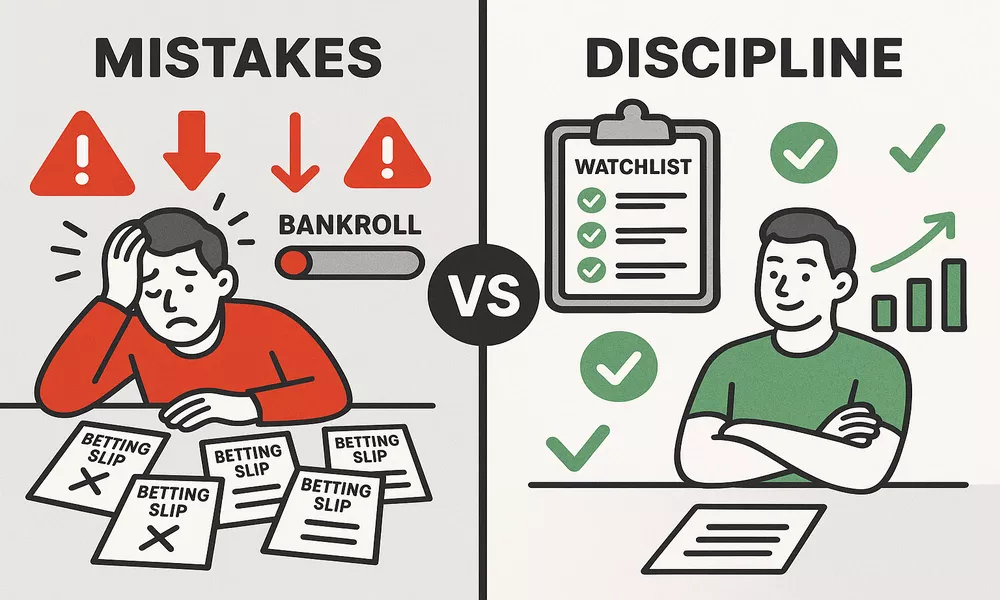
Most bettors lose money on live betting despite it feeling like they have an information advantage from watching matches. The mistakes are predictable and exploitable if you recognize them in others while avoiding them yourself.
Chasing losses is the fastest way to destroy bankroll in live betting. You lose a bet and immediately look for another to recover the loss. This desperation leads to betting situations that don’t meet your value criteria but feel like they might work out. The rushed decision-making and emotional motivation stack the odds against you. The solution is predetermined loss limits that force you to stop betting once you hit them, removing the temptation to chase.
Betting every match you watch is action bias in its purest form. Live betting feels like you should be doing something because odds are updating constantly and the match is dynamic. But most matches don’t present genuine value opportunities. The disciplined approach is watching prepared to act while comfortable doing nothing for long stretches. If you’re betting ten times per match, you’re not finding value you’re gambling for entertainment.
Overweighting visual information leads to systematic errors. Something looks significant because you just watched it happen, but its actual impact on match probability is minimal. A team dominates possession for five minutes and has three half-chances, and you bet on them. But possession without quality chances doesn’t predict goals, and your eyes convinced you something meaningful occurred when it was mostly noise.
The counter is relying more on statistics than visual observation. That team looks dominant, but what’s their xG in this match? Are they creating quality chances or just having the ball? Are they dominating because they’re actually better or because the opponent is sitting deep and happy to counter? Statistics provide objectivity that visual observation lacks.
Ignoring score effects causes persistent mistakes. You see a team go ahead and bet on them because they look good. But teams ahead typically become more conservative, reducing their attacking threat. The team behind becomes more attacking, increasing their chances of scoring. The visual evidence of dominance you’re seeing is partially an artifact of match state, not sustainable quality superiority.
Falling for commentator narratives is embarrassingly common. Commentators create storylines that make matches more interesting but rarely reflect tactical reality. They talk about momentum, about wanting it more, about pressure, about must-win situations. These narratives are mostly entertainment rather than analysis. Successful live bettors ignore commentary entirely or listen only for factual information like injuries.
Reacting to red cards without context costs bettors repeatedly. A red card is significant, but its impact depends entirely on when it happens, the match state, which team it affects, and which player gets sent off. The algorithm updates odds based on a red card occurring but can’t fully account for all context. A red card to a defensive player when the team is already ahead and defending is much less damaging than a red card to an attacker when trailing and needing goals.
Betting live without pre-match analysis means you’re just reacting to randomness with zero edge. You don’t know whether what you’re seeing is unusual or typical for these teams. You don’t know whether the current match state favors one side beyond what odds suggest. You’re flying blind but convinced you have insight from watching. The illusion of knowledge is more dangerous than acknowledged ignorance.
The mistake is thinking live betting is easier than pre-match because you can see what’s happening. Actually, it’s much harder because you need to process information quickly, distinguish signal from noise, resist emotional reactions, identify when the market mispriced something, and execute before the opportunity disappears. Most bettors aren’t capable of this under time pressure, which is exactly why disciplined bettors find edges in live markets.
Building Sustainable Live Betting Discipline
Live betting can be profitable, but only with systematic discipline that most bettors never develop. The constant action and emotional engagement makes maintaining discipline brutally difficult, which is precisely why it’s so valuable.
Creating pre-match watchlists prevents reactive betting. Before matches start, identify two to four specific scenarios that would represent value if they occur. Write them down explicitly. During the match, bet only those scenarios. Everything else is off-limits regardless of how compelling it looks. This constraint forces selectivity and prevents action bias from dominating your decisions.
The scenarios should be specific and falsifiable. Not “bet Team A if they go behind” but “bet Team A if they concede first and their odds drift to 2.00 or higher, provided they’re still creating chances and the goal was against the run of play.” This specificity prevents rationalizing bets that don’t actually meet your criteria.
Time limits enforce discipline by capping how long you’ll watch and bet. Decide before starting that you’ll actively live bet for two hours maximum, then take a break regardless of how matches are going. This prevents mental fatigue from degrading decision quality and reduces action bias by limiting your betting window. Opportunities you miss during breaks didn’t disappear similar situations will arise in other matches.
Position sizing rules prevent catastrophic losses from inevitable mistakes. Live bets should typically be half your normal stake because your edge is smaller and the time pressure increases error rates. Never increase stakes when losing to recover faster. This conservative approach protects bankroll while still capitalizing on genuine edges that exist in live markets.
Specialization beats generalization in live betting more than anywhere else. Master live betting in one sport rather than dabbling across many. The patterns that predict value opportunities are sport-specific and require experience to recognize reliably. If you split attention across football, basketball, and tennis, you’ll be mediocre at all three. Focus creates expertise that compounds into sustainable edge.
Technology that reduces friction improves discipline paradoxically. Fast betting apps and pre-funded accounts mean you can execute quickly when genuine opportunities appear without feeling rushed or missing them. This reduces the temptation to bet marginal opportunities because you’re not worried about missing the good ones. The technical infrastructure supports rather than undermines discipline.
Reviewing live betting results separately from pre-match bets reveals whether your live betting actually works. Track ROI specifically for live wagers. If it’s negative or below your pre-match ROI, you’re not finding edges you’re fooling yourself with action bias. The data forces honesty about whether live betting adds value to your approach or just adds variance and entertainment.
The mental model shift that makes live betting sustainable is thinking of it as hunting rather than farming. You’re not trying to extract value from every match you watch. You’re patiently waiting for specific prey to appear, then striking decisively when conditions are optimal. Most of your time is spent waiting and watching rather than actively betting. This mindset prevents the exhausting and costly approach of constant action.
Accepting that you’ll miss opportunities is essential for longevity. You can’t watch every match, can’t catch every mispricing, can’t always execute before the market corrects. Missing opportunities feels bad but costs nothing. Making bad bets trying not to miss opportunities costs real money. The sustainable approach prioritizes quality over quantity ruthlessly, even when that means watching matches without betting anything.
Live betting is a marathon of split-second sprints. You need the patience to wait for hours for the right situations combined with the decisiveness to act instantly when they appear. Most bettors have one or the other but not both. Developing both through deliberate practice is what separates profitable live betting from expensive entertainment that feels like it should be profitable but never actually is.
