
Bet Prediction: Data-Driven Tools & ROI Analytics 2026
 Available in US
Master the art and science of sports bet prediction with data-driven strategies, statistical analysis, and proven methodologies that separate professional bettors from casual gamblers.
There's something almost magnetic about the idea of predicting sports outcomes. Maybe it's the thrill of being right when everyone else is wrong, or perhaps it's the simple satisfaction of watching your analysis play out exactly as you called it. But here's the uncomfortable truth most betting content won't tell you: the vast majority of people making bet predictions are doing it completely wrong.
They're not analyzing. They're guessing with extra steps.
The difference between a genuine bet prediction and a glorified coin flip comes down to process, data, and a healthy respect for probability. Professional bettors don't chase certainty because they know it doesn't exist in sports. Instead, they hunt for edges small advantages that compound over hundreds of bets into consistent profit. This guide will show you how they do it, without the mystical nonsense or get-rich-quick promises that plague most betting advice.
Whether you're tired of losing money on gut feelings or you're ready to move beyond casual betting into something more methodical, understanding true bet prediction methodology changes everything. You'll learn to see games differently, spot value where others see random noise, and most importantly, you'll develop a framework that improves with time rather than depending on luck.
Let's start with what bet prediction actually means, and more crucially, what it doesn't.
What Is Bet Prediction and Why It Matters
Walk into any sports bar on game day and you'll hear predictions flying around like confetti. Everyone has an opinion about who's going to win, usually delivered with complete confidence and zero supporting evidence. That's not prediction that's fandom with a sprinkle of hope.
Real bet prediction is the systematic process of forecasting sports outcomes using quantifiable data, historical patterns, and statistical analysis. It's recognizing that while individual games contain randomness you can't control, large sample sizes reveal patterns you absolutely can exploit. The professional bettor doesn't predict Game 73 of the NBA season because they possess supernatural foresight. They predict it because they've analyzed matchup data, injury reports, rest days, historical performance in similar situations, and calculated the probability of various outcomes.
Here's where most people get tripped up: they confuse prediction with certainty. A prediction isn't a guarantee. When a meteorologist says there's a seventy percent chance of rain, they're not failing if it stays sunny. They're expressing probability based on available data. Sports prediction works the same way. You might correctly identify that Team A has a sixty percent chance of winning, but that also means they'll lose forty percent of the time. Understanding this distinction separates bettors who survive from those who blame bad luck and quit.
The value of proper prediction methodology extends beyond just picking winners. It teaches you to think in probabilities rather than absolutes, to separate signal from noise, and to make decisions based on expected value rather than outcome. These skills transcend betting. They apply to investing, business decisions, and any domain where you're working with incomplete information and uncertain outcomes.
Most importantly, bet prediction matters because bookmakers are already using sophisticated models to set their lines. They employ teams of analysts, statistical models, and machine learning algorithms. Going up against that infrastructure with nothing but your gut feeling is like bringing a butter knife to a gunfight. You need methodology, not just motivation.
The Science Behind Accurate Bet Predictions
Data doesn't lie, but it whispers rather than shouts. The science of bet prediction starts with understanding what statistics actually tell you and, equally important, what they don't. Too many bettors treat numbers like magic runes that reveal hidden truths. In reality, statistics are tools that help you construct probabilistic models of future outcomes.
The foundation of any prediction system is expected value, often shortened to EV. This concept comes straight from probability theory and represents the average outcome you can expect from a bet if you could repeat it infinite times. The math is straightforward: multiply each possible outcome by its probability, then sum everything up. If you bet ten dollars on something with true odds of winning at fifty-five percent that pays even money, your expected value is positive. Do this repeatedly, and you profit. Bet on negative EV opportunities, and you slowly bleed money no matter how many individual bets you win.
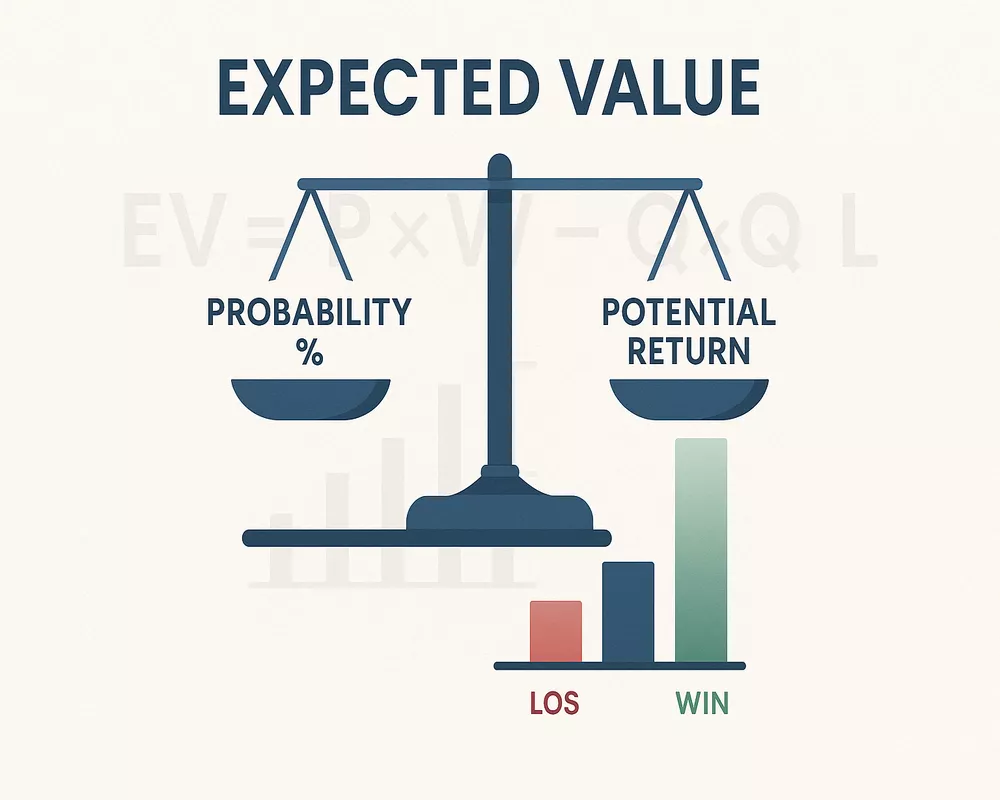
Professional predictors obsess over EV because it's the only metric that matters long-term. You can win sixty percent of your bets and still lose money if you're consistently betting into negative expected value. Conversely, you can win just forty-five percent and profit handsomely if you're identifying mispriced lines with positive EV. This is why sharp bettors can endure brutal losing streaks without panicking they trust their process and expected value to win out over sufficient sample sizes.
Statistical models used in bet prediction range from relatively simple regression analysis to complex machine learning algorithms. At their core, they all attempt to answer the same question: what's the true probability of this outcome, and how does it compare to what the market thinks? Simple models might use basic metrics like points per game, win-loss records, and home-field advantage. More sophisticated approaches incorporate hundreds of variables: pace of play, defensive efficiency, rest days, travel distance, referee tendencies, weather conditions, and countless others.
The Poisson distribution deserves special mention because it's remarkably effective for predicting goal-based sports like soccer and hockey. This statistical model estimates the probability of a given number of events happening in a fixed interval, making it perfect for forecasting how many goals a team might score. By calculating expected goals for both teams, you can derive probabilities for various outcomes: home win, away win, draw, over-under totals, and even correct score predictions. It's not perfect, but it's mathematically sound and beats casual prediction methods by a considerable margin.
Machine learning has revolutionized bet prediction in recent years, though it's not the magical solution many claim. Algorithms excel at finding patterns in massive datasets that human analysts would never spot. They can process every shot location, pass completion rate, defensive formation, and player movement pattern from thousands of games, then identify which combinations correlate with wins. The downside is that machine learning models can overfit historical data, discovering patterns that existed by chance rather than causation. A model might determine that teams wearing blue jerseys win more often on Thursdays, but that's correlation without causation. Human oversight remains essential to separate genuine predictive factors from statistical noise.
What separates effective prediction from number-crunching theater is understanding context. Statistics provide the foundation, but sport isn't played in a vacuum. A team missing their best player isn't just losing talent they're potentially changing their entire tactical approach, team morale, and opponent strategy. The numbers tell you what happened; intelligent analysis tells you what it means for what happens next.
Essential Factors for Making Predictions
Anyone can look at a league table and predict the top team will beat the bottom team. The profitable predictions happen in the margins, where the outcome is less obvious and the lines potentially contain exploitable value. Getting these predictions right requires analyzing multiple factors and understanding how they interact.
Team form sits at the top of most prediction frameworks, but it's trickier than simply looking at recent results. A team that won their last five games might look unstoppable until you notice they played five relegation candidates and barely scraped through each match. Context transforms data from misleading to meaningful. When analyzing form, you need to consider opposition quality, margin of victory, underlying metrics like shot counts and possession, and whether results matched performance or depended on unsustainable luck.
The home and away split matters more in some sports than others, but it's universally relevant. Home teams typically win more often due to familiar surroundings, crowd support, reduced travel fatigue, and psychological comfort. However, the magnitude varies wildly. In football, home advantage might be worth half a goal. In basketball, it could mean six to eight points. Understanding the typical home advantage in your chosen sport lets you identify when bookmakers have over or undercompensated in their lines.
Injuries and lineup changes can completely transform a team's capabilities, yet casual bettors often underestimate their impact. Losing a star player obviously hurts, but sometimes the second and third-order effects matter more. A midfielder's absence might force formation changes that expose defensive weaknesses. A backup quarterback might necessitate a more conservative game plan that fundamentally alters the team's scoring potential. Smart prediction means tracking not just who's out, but how that absence ripples through the entire team structure.
Historical matchup data provides valuable context but requires careful interpretation. Yes, Team A has beaten Team B in seven straight meetings, but were those meetings five years ago with completely different rosters? Head-to-head records matter most when recent, when key personnel remain consistent, and when tactical approaches haven't dramatically shifted. Otherwise, you're drawing conclusions from effectively unrelated events.
Motivation is the factor everyone talks about and almost nobody quantifies properly. The relegation-threatened team playing for survival supposedly has extra motivation, but does that actually translate to better performance, or does the pressure cause them to freeze? Derby matches supposedly matter more, but do they matter enough to overcome a significant talent gap? The honest answer is that motivation's impact is real but inconsistent and hard to measure. Use it as a tiebreaker when other factors are equal, not as a primary decision driver.
Weather and playing conditions merit attention in outdoor sports. Rain affects football by making the pitch slippery, potentially neutralizing speed advantages and making possession-based play more difficult. Wind impacts passing games in American football and affects kicking in rugby. Extreme heat causes fatigue that benefits deeper squads. These factors don't determine outcomes, but they shift probabilities enough that ignoring them means missing potential edges.
Market movement how betting lines change over time offers a window into where sharp money is going. When a line moves despite lopsided public betting on one side, professional bettors are likely hammering the other side. This doesn't mean you should blindly follow line movements, but they provide information about what sophisticated analysts think. If you've done your homework and identified value on one side, then see sharp money confirming your analysis through line movement, that's a strong signal you're onto something.
The single most important factor, though, is value. You can correctly predict outcomes all day long and still lose money if you're not getting favorable odds. Bet prediction isn't about being right it's about being right more often than the odds suggest you should be. A team might have a sixty percent chance to win, but if the bookmaker is only offering odds that imply a seventy percent chance, there's no bet to be made. Value is king. Everything else is supporting cast.
How Bet Prediction Differs Across Major Sports
Sports share fundamental similarities but differ dramatically in what makes them predictable. A prediction framework that works brilliantly for baseball might fail spectacularly when applied to soccer. Understanding these sport-specific nuances separates competent predictors from those who treat every sport identically.
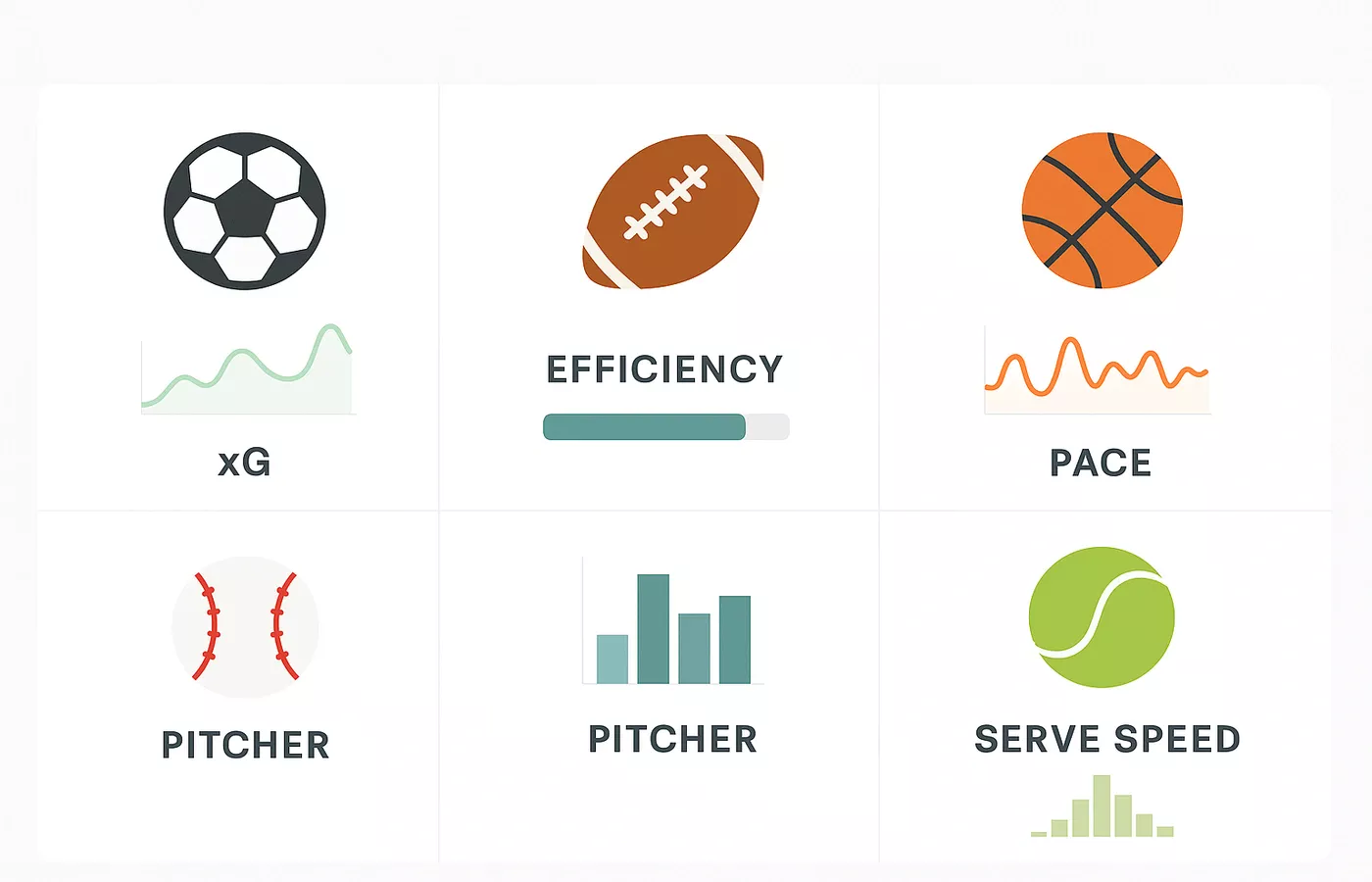
Football, or soccer to Americans, presents unique challenges due to low scoring and high variance. A single deflection or refereeing decision can determine the entire outcome, meaning the better team loses more often than in other sports. Expected goals models have revolutionized football prediction by measuring shot quality rather than just shot quantity. A team might have twenty shots compared to their opponent's five, but if those twenty shots were speculative efforts from thirty yards while the five were close-range chances, the underlying data tells a completely different story than the raw numbers suggest.
Goals markets in football offer more predictable opportunities than match winners. Over-under and both teams to score bets depend on style matchups and historical scoring patterns rather than picking a specific winner. Two attacking teams with weak defenses might reliably produce high-scoring games regardless of who wins. Conversely, defensive-minded sides might consistently produce under two and a half goals without requiring you to predict the victor. Clean sheet probability, corner counts, and card markets add additional prediction angles beyond simple win-draw-loss outcomes.
American football combines strategic complexity with statistical richness. The stop-start nature creates discrete events you can analyze independently. Point spread betting dominates the market, and predictors focus heavily on pace of play, offensive and defensive efficiency, turnover rates, and special teams performance. Quarter-by-quarter analysis reveals teams that start slow but finish strong, or vice versa, creating opportunities in live betting markets.
The key with NFL prediction is that coaching quality and scheme matchups matter enormously. A mobile quarterback facing a defense that struggles to contain scrambling presents a specific exploitable advantage. Offensive line strength versus pass rush quality often determines games more than skill position talent. Weather affects outdoor games significantly, particularly wind for passing games. Player props in American football offer tremendous prediction opportunities because individual matchups can be isolated and analyzed with precision.
Basketball stands out for high scoring and relatively consistent outcome probabilities. The margin for error is smaller because better teams win more reliably than in low-scoring sports. This efficiency makes basketball betting more about finding small edges rather than massive upsets. Pace of play is crucial a fast-paced game between two teams that like to run will produce a different total than a plodding defensive battle. Back-to-back games cause measurable fatigue, particularly when combined with travel. Teams playing their fourth game in five nights are statistically worse, especially in the second half.
Three-point shooting variance causes problems for predictors because an otherwise ordinary team can get hot from beyond the arc and blow out a superior opponent. The randomness evens out over a season, but individual game prediction requires acknowledging this variability. Player props and alternate lines often present better value than straight spreads because the market is less efficient at pricing these derivatives.
Baseball is a grinder's sport for prediction. Individual game outcomes contain enormous variance the best teams lose forty percent of their games while the worst win forty percent. Season-long success comes from identifying small edges repeatedly rather than huge advantages occasionally. Pitcher matchups drive baseball prediction more than any other factor. A strong starting pitcher can single-handedly shift win probability by fifteen percent or more.
The beauty of baseball for predictors is the wealth of data. Every pitch is tracked, categorized, and analyzed. You can compare not just performance levels but stylistic matchups: how this specific hitter performs against that particular pitch type, or how this pitcher fares against left-handed power hitters. Weather matters significantly, with wind direction and speed directly impacting how far balls travel. Ballpark factors are massive some stadiums inflate scoring by twenty percent compared to neutral environments.
Tennis offers one-versus-one simplicity that makes certain prediction angles cleaner. Surface type dominates everything. A player dominant on clay might struggle on grass, and indoor hard courts play differently than outdoor ones. Head-to-head records matter tremendously in tennis because stylistic matchups are personal and consistent. A player with a massive serve might dominate most opponents but lose repeatedly to a specific returner whose skills neutralize that weapon.
The best-of-three versus best-of-five format distinction affects prediction because variance decreases with match length. Upsets happen more frequently in best-of-three formats. Physical condition becomes increasingly relevant late in tournaments when players are dealing with fatigue and minor injuries. Current form and recent results matter more in tennis than most sports because fitness and confidence shift rapidly.
Each sport requires adapted methodology, but the underlying principles remain constant: identify the key drivers of outcomes, quantify their impact, find where the market misprices them, and bet accordingly.
Common Prediction Mistakes and How to Avoid Them
Learning what not to do often teaches more than learning what to do. Most bettors lose money not because they lack information, but because they make consistent cognitive errors that sabotage otherwise sound analysis.
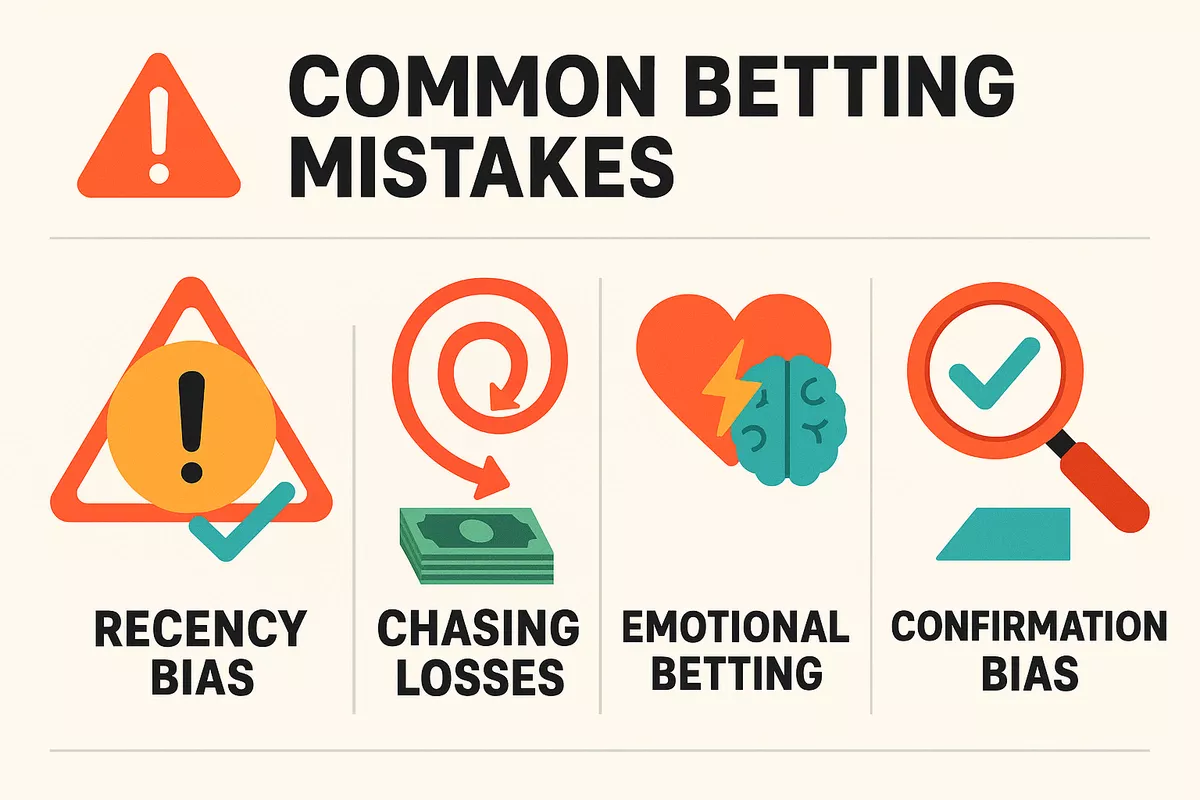
Recency bias might be the most expensive mistake in bet prediction. A team looks unbeatable after three straight dominant wins, so you back them heavily. They promptly lose because those three games happened to coincide with a favorable schedule stretch and regression was inevitable. Humans are hardwired to overweight recent events and underweight base rates. That team might have a fifty-five percent win rate over the season, but after seeing them demolish opponents three times in a row, your brain incorrectly assumes they're suddenly an eighty percent team.
The antidote is consciously expanding your sample size. Recent form matters, but three games is noise. Ten games starts approaching signal. Thirty games is enough to draw reasonable conclusions. When you notice yourself getting excited about a team's recent run, force yourself to zoom out and look at larger patterns. Often, you'll discover the recent hot streak is just random variance doing what it does.
Ignoring regression to the mean destroys bankrolls methodically. A striker scores in seven consecutive games and suddenly everyone's predicting an anytime scorer bet like it's free money. Except scoring in seven straight games is probably unsustainable luck, and regression to his actual scoring rate is coming. Team shooting percentages, turnover rates, injury luck, and close game records all regress toward league averages over time. When you see extreme performances, your default assumption should be regression, not a permanent new level of performance.
The chase is death. You lose three bets in a row and suddenly you're doubling your stake on the next one because you're "due" to win. Probability doesn't work that way. Each bet is independent. Your previous losses don't increase your chances of winning the next one. Chasing losses with desperate bets on questionable value just accelerates the downward spiral. Proper bankroll management means betting a consistent percentage regardless of recent results. Trust the process and sample size to work out, not escalating stakes to force short-term recovery.
Confirmation bias makes you seek information that supports your preferred outcome while dismissing contradictory evidence. You want Team A to win, so you emphasize stats that favor them and rationalize away their weaknesses. This isn't conscious dishonesty your brain genuinely filters reality to match your pre-existing belief. Combat this by deliberately arguing against your own position. Before placing any bet, force yourself to construct the strongest possible case for the opposite outcome. If you can't articulate why you might be wrong, you're probably not thinking clearly.
Emotional betting disguised as analysis is everywhere. That touchdown celebration disrespected your favorite team, so you're betting their opponent next week for revenge. A player you dislike is getting media hype, so you're fading him out of spite. Any time emotions enter prediction, you're compromising the process. The market doesn't care about your feelings, and neither do outcomes. Bet like a robot executing a process, not like a fan settling scores.
Following tipsters blindly transfers the thinking to someone else who's probably no better informed than you. The internet is full of "experts" selling picks, and the vast majority are either charlatans or mediocre bettors exploiting survivorship bias. Anyone can get hot for a few weeks through pure luck, screenshot their winning slips, and launch a tipping service. Treat tipsters as one information source among many, never as gospel. Understand their reasoning, verify their track record over meaningful sample sizes, and always make your own final decision.
The biggest mistake, though, might be betting without a system. If you can't articulate your process, if every bet is a unique judgment call based on vibes, you're not predicting you're guessing. Develop a framework, track results, identify what works and what doesn't, then refine continuously. Without systematic methodology, you're just gambling and hoping.
Prediction Tools and Resources
Raw intelligence only takes you so far. The modern sports bettor has access to tools and data that would have seemed like science fiction twenty years ago. Using them effectively multiplies your analytical capabilities.
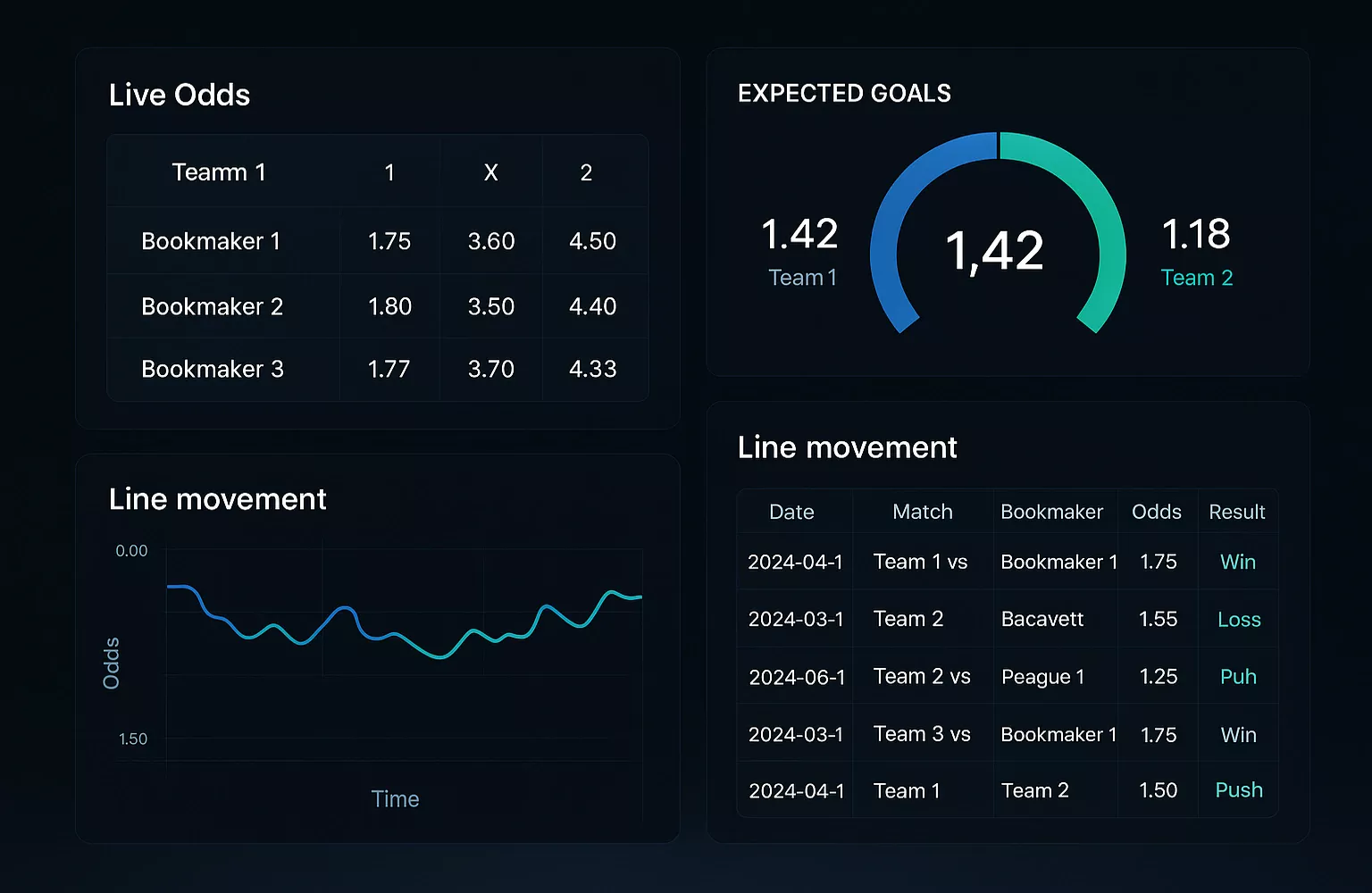
Statistical databases have democratized access to the kind of information previously available only to professional organizations. FBref provides exhaustive football statistics including expected goals, passing networks, defensive actions, and just about every metric imaginable. Basketball Reference offers decades of NBA data with advanced metrics like true shooting percentage, player efficiency rating, and on-off splits. Baseball Savant delivers pitch-by-pitch data with spin rates, exit velocities, and launch angles. These platforms don't do the analysis for you, but they provide the raw materials for informed prediction.
The key is knowing which statistics actually matter. Websites throw dozens of metrics at you, but many are descriptive rather than predictive. A team's current win total tells you what happened, not what will happen. Expected goals based on shot quality, defensive efficiency adjusted for opponent strength, or rest-disadvantage records reveal underlying performance that predicts future outcomes better than raw results.
Odds comparison sites solve the critical problem of line shopping. Different bookmakers offer different odds on the same event, sometimes significantly different. Getting 2.10 instead of 1.95 on the same bet might not seem dramatic, but over hundreds of bets, those differences compound into thousands in additional profit or loss. OddsPortal and similar sites let you instantly compare dozens of bookmakers to ensure you're always getting maximum value. Professional bettors maintain accounts at multiple books specifically to exploit these differences.
Expected goals models have revolutionized football prediction. Services like Understat and FBref calculate xG for every shot based on location, angle, defensive pressure, and shot type. Teams consistently outperforming their xG are likely getting lucky and due for regression. Teams underperforming xG might be unlucky and present value as the market overreacts to poor results despite solid underlying performance. These models aren't perfect they can't account for shot technique or goalkeeper quality perfectly but they're dramatically better than just counting shots or looking at possession.
AI prediction platforms have emerged as powerful tools, though they require careful evaluation. Services like Sports AI or BetIdeas use machine learning to process massive datasets and identify betting value. Their strength is pattern recognition at a scale impossible for humans. The weakness is that they're black boxes you don't always understand why the algorithm favors a particular bet. Use AI predictions as additional input to your process, not as a replacement for understanding. When AI and your analysis agree, confidence increases. When they disagree, figure out why rather than blindly following either.
Tracking software transforms random betting into a measured process. Applications like Pikkit or simple spreadsheets let you record every bet with the odds taken, stake amount, reasoning, and outcome. Over time, patterns emerge: maybe you're profitable on underdogs but lose money on favorites, or perhaps tennis predictions work while football bets consistently fail. Without tracking, you're flying blind. With it, you can identify strengths to exploit and weaknesses to eliminate.
Community prediction platforms and forums provide additional perspectives but require critical evaluation. Sites like OLBG or Betting Expert aggregate predictions from thousands of users. Consensus can reveal where the smart money is going, but it can also reflect groupthink. The most valuable forum contributions come from users who show their work explaining their reasoning with supporting evidence rather than just posting picks. Learn to distinguish between informed analysis and confident ignorance.
The most important tool, though, is probably Excel or Google Sheets. Building your own models and tracking systems teaches you more about bet prediction than any purchased service. Start simple: create a basic expected goals model for football, or a rest-disadvantage tracker for basketball. Compare your predictions to actual outcomes. Refine your assumptions. It's work, but the learning compounds, and eventually you develop intuition about what drives outcomes that can't be taught any other way.
Building Your Prediction System
Tools and knowledge mean nothing without a systematic process that turns information into decisions consistently. Your prediction system is your competitive advantage the framework that helps you find value others miss while avoiding mistakes that sink most bettors.
Start by choosing your specialization. The sports betting market is enormous, and trying to predict everything means developing expertise in nothing. Professional bettors specialize ruthlessly because deep knowledge in one area beats superficial knowledge across many areas. Pick one sport, maybe two at most. Within that sport, consider focusing on specific leagues or markets. The bettor who knows Championship football inside-out will crush the generalist dabbling in every top-flight league.
Your methodology should be documented and consistent. Write down your process: what factors you consider, how you weight them, what data sources you trust, what thresholds trigger bets. This isn't about creating rigid rules that eliminate judgment. It's about establishing a baseline approach that produces consistent decisions rather than random judgments that vary based on mood or recent results. When you document your process, you can also refine it systematically by identifying which elements work and which don't.
Bankroll management isn't optional it's the difference between surviving inevitable downswings and going broke. Professional bettors typically risk one to three percent of their bankroll per bet, maybe up to five percent on their highest-confidence plays. This conservative approach ensures that even brutal losing streaks don't eliminate your ability to continue betting when the edge returns. Many talented predictors fail not because their analysis is wrong but because they bet too much too fast and variance eliminates them before skill can manifest.
Record keeping must be obsessive. Track every bet with the date, sport, league, bet type, odds, stake, and outcome. Add a notes field where you briefly explain your reasoning. Weekly or monthly, review your results. Calculate your return on investment overall and broken down by sport, league, bet type, and any other category relevant to your betting. These reviews reveal patterns invisible day-to-day: maybe afternoon games are profitable while evening games lose money, or perhaps your analysis works on favorites but fails on underdogs.
Set realistic accuracy goals based on market efficiency. In heavily bet markets like NFL point spreads, professional bettors consider fifty-three to fifty-five percent accuracy exceptional. In less efficient markets like lower league football, you might achieve sixty percent or better. Aiming for seventy-five percent accuracy is fantasy. Understanding this prevents disappointment during normal variance and helps you maintain perspective during both winning and losing streaks.
Continuous improvement requires honest self-assessment. When you lose a bet, was your analysis wrong, or did variance just go against you? When you win, did your reasoning prove correct, or did you get lucky? The outcomes themselves are less important than the process. A bad beat where you had the right side but caught bad luck is actually a success you made the correct decision, and repeating that decision will profit long-term. A lucky win on a terrible bet is a failure disguised as success.
Adaptation means updating your models as the market evolves. What worked last season might not work this season because bookmakers adjusted or the sport changed. Stay current with tactical trends, rule changes, and market movements. The prediction system you built shouldn't be static. It's a living thing that improves through iteration.
The most successful prediction systems share one characteristic: they're boring. There's no drama, no swashbuckling hero calls, no revenge betting or emotional investment. Just consistent application of a tested process, bet after bet after bet, letting probability work over sufficient sample size. It's not exciting, but it works.
Advanced Prediction Techniques
Once you've mastered the fundamentals, advanced techniques separate consistent winners from those who plateau. These concepts require deeper understanding and more sophisticated analysis, but they unlock value in places most bettors never look.
Closing Line Value measures your skill independent of short-term results. The closing line the final odds available right before an event starts represents the market's most efficient assessment of true probability. Sharp bettors have already placed their bets, information is maximized, and the line reflects the collective wisdom of everyone with an opinion and money to back it. If you consistently bet at better odds than the closing line, you're demonstrating skill. A bettor who takes +150 on a team that closes at +130 has positive CLV regardless of whether that specific bet wins or loses.
Tracking your CLV over hundreds of bets reveals whether you're finding genuine value or just getting lucky. Positive CLV bettors win money long-term even if they're currently enduring a losing streak. Negative CLV bettors lose money eventually even if they're temporarily winning. This metric removes the short-term noise of variance and shows whether your process actually works. It's the single best measure of betting skill.
Steam moves occur when sharp money hits the market hard enough to move lines dramatically in minutes. Monitoring line movements across multiple bookmakers reveals when informed bettors are taking strong positions. If the line on a football match suddenly shifts from -110 to -125 across every major bookmaker within ten minutes, despite no news or public betting to justify it, sharp money is at work. Following steam moves means piggybacking on professional analysis, though you need to act quickly before the value disappears.
Arbitrage opportunities happen when different bookmakers offer odds that allow you to bet both sides of a market and guarantee profit regardless of outcome. These opportunities are rare and short-lived in efficient markets, but they exist in cross-sport combinations, player props, and live betting. Successful arbing requires accounts at numerous bookmakers, quick execution, and careful calculation to avoid mistakes. It's not technically prediction you're exploiting bookmaker disagreement rather than forecasting outcomes but it's a valuable tool in the advanced bettor's arsenal.
Line shopping mastery goes beyond just comparing odds. It means understanding which bookmakers tend to shade lines toward favorites or dogs, which ones are sharp on certain sports and soft on others, and which offer better props markets. Some books cater to recreational bettors and offer softer lines as a result. Others limit or ban winning players quickly. Building a portfolio of accounts at books with different characteristics maximizes your ability to exploit market inefficiencies.
Correlated parlays in theory offer value when outcomes are linked in ways bookmakers haven't properly priced. A defensive football team with a great kicker might correlate: low-scoring game plus the favorite to cover a small spread. The problem is that most bookmakers now restrict correlated parlays or adjust pricing to eliminate the edge. The technique still works occasionally in player props within the same game, where markets are less efficient and correlations might be missed.
Live betting presents unique opportunities because markets move so quickly that inefficiencies appear constantly. The bookmaker's models update instantly, but they can't account for momentum shifts, tactical changes, or motivational factors as well as an informed observer watching the game. If you've done your pre-match homework and know what to look for, you can identify spots where the live odds don't match reality. The challenge is avoiding the trap of betting just because you're watching. Discipline matters even more in live betting than pre-match.
Hedging strategies let you guarantee profit or minimize loss on bets already placed. If your pre-match bet is winning and you can take the opposite side at favorable odds, you can lock in profit regardless of the final outcome. The math is straightforward, but the psychology is tricky. Many bettors hedge too early, sacrificing expected value for certainty. Others refuse to hedge out of pride and watch guaranteed profits disappear. The correct approach depends on your bankroll situation and risk tolerance, but having hedging options is valuable.
These advanced techniques aren't magic. They're refinements that squeeze additional edge from markets that are already fairly efficient. The fundamentals still matter most: sound analysis, value identification, bankroll management, and discipline. Advanced methods help, but they're the icing rather than the cake.
Turning Predictions Into Long-Term Profit
Knowledge without application means nothing. Understanding bet prediction methodology is step one. Turning that understanding into consistent long-term profit is the actual goal, and it's harder than the analysis itself.
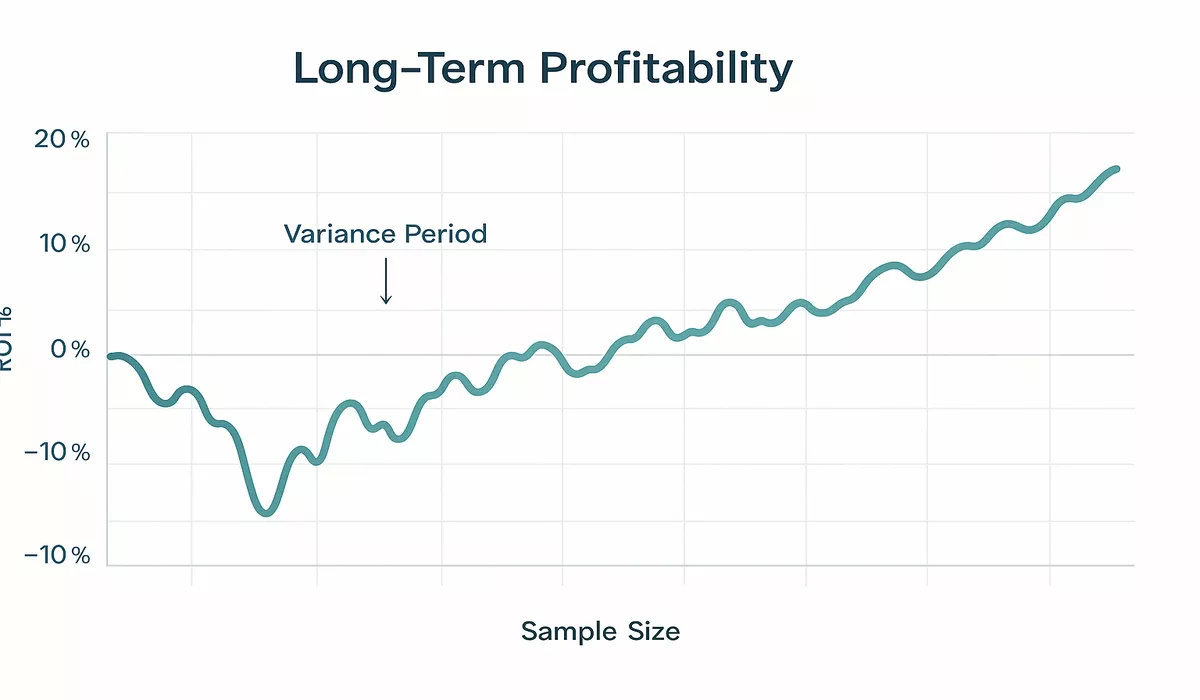
The reality of prediction accuracy needs to be understood viscerally, not just intellectually. No one bats a thousand. The best professional sports bettors win somewhere between fifty-three and sixty percent of their bets depending on the market. That means losing forty to forty-seven percent of the time. You will experience losing streaks that feel interminable. Seven, ten, fifteen straight losses are mathematically inevitable given enough bets. Your system might be working perfectly, and you'll still endure stretches where nothing goes right. Accepting this emotionally, not just conceptually, is crucial.
Value always matters more than accuracy. A bettor who wins forty-eight percent of bets at average odds of +150 makes more money than someone who wins fifty-five percent at -110. The latter has better accuracy but worse results because they're not getting sufficient value to compensate for the juice. Chasing high win rates by betting heavy favorites is fool's gold. Chase value instead, and let the percentages work over time.
Sample size is your friend and your test. If you've placed fifty bets and you're down money, that means basically nothing. Variance dominates over small samples. At five hundred bets, patterns start emerging. At two thousand bets, you have statistical significance. Most bettors quit long before they've accumulated enough data to actually evaluate whether their system works. They lose heart during natural variance and abandon a profitable approach because they didn't give it sufficient time to manifest.
The long-term mindset separates professionals from amateurs in every way. Professionals think in terms of expected value over thousands of bets. Amateurs think in terms of today's results. Professionals weather losing streaks by trusting their process. Amateurs panic and change their approach every time they hit a rough patch. Professionals view betting as a marathon where consistency matters. Amateurs treat it like a sprint where immediate results determine success.
Continuous learning never stops. Markets evolve, tactics change, new data becomes available, and analytical techniques improve. What worked five years ago might be obsolete today. Stay current with tactical trends in your chosen sport. Follow sharp bettors and learn from their approaches. Read research papers on statistical methods. Experiment with new tools and models. The moment you think you've figured it out completely is probably the moment you start falling behind.
Responsible gambling underlies everything. If betting stops being fun, if losses affect your wellbeing, if you're betting money you can't afford to lose, stop immediately. The math works, but only if you can survive the variance psychologically and financially. Set loss limits. Take breaks. Remember that even the best bettors lose regularly. If gambling becomes a problem, resources exist to help, and there's zero shame in using them.
The bettor who makes money long-term isn't the one who occasionally hits a massive parlay or correctly predicts an upset. It's the one who shows up consistently, applies sound methodology, bets value regardless of recent results, manages their bankroll conservatively, and trusts the process to work over sufficient sample size. It's unglamorous, but it works.
Bet prediction isn't magic. It's not even particularly complicated once you understand the principles. But it requires discipline, honesty, systematic thinking, and patience. Most people have the intellectual capability to become profitable bettors. Very few have the psychological makeup to actually do it. The tools and knowledge are in your hands now. Whether you use them profitably depends entirely on whether you can execute consistently over time.
Start small. Pick one sport. Build a simple system. Track everything. Learn from losses and wins equally. Refine continuously. And most importantly, think in probabilities rather than certainties. Do that, and you're already ahead of ninety percent of bettors out there.
FAQ
How accurate can bet predictions really be?
The uncomfortable truth is that even elite prediction models rarely exceed fifty-five to sixty percent accuracy in efficient markets. That's not failure that's the reality of competing against sophisticated bookmakers using advanced analytics. The key metric isn't accuracy but expected value. You can win forty-eight percent of bets and profit handsomely if you're consistently getting better odds than true probability suggests. Professional bettors focus on finding small edges repeatedly rather than seeking high accuracy on every bet. Sample size matters enormously because short-term results are dominated by variance. Ten straight losses doesn't mean your system is broken, and ten straight wins doesn't validate a flawed approach. Track performance over hundreds of bets before drawing conclusions about your methodology's effectiveness.
What's the difference between free and paid bet predictions?
Free predictions range from genuinely useful analysis shared by knowledgeable bettors to clickbait designed to drive traffic. Paid services vary even more wildly, from professional handicappers with proven track records to scammers exploiting desperate bettors. The price tag doesn't correlate reliably with quality. Many paid tipsters use survivorship bias, heavily promoting their wins while downplaying losses. Others simply get lucky for a few weeks and monetize before regression hits. If you're considering paying for predictions, demand verifiable long-term results with full bet history, understand their methodology rather than just following blindly, and recognize that any service claiming seventy-plus percent accuracy is probably lying. The advantage of developing your own prediction system is that you understand exactly why each bet makes sense, you're not dependent on someone else's schedule or availability, and you improve continuously through hands-on experience.
Can AI really predict sports bets better than humans?
AI excels at processing massive datasets to identify patterns that humans would never spot. Machine learning algorithms can analyze thousands of games, every player statistic, every tactical variation, and find correlations between specific combinations and outcomes. That's a genuine advantage over human analysis capacity. However, AI struggles with context that humans grasp intuitively. A team's morale after a coaching change, the significance of a rivalry match, late-breaking injury news, or tactical adjustments mid-game these factors are harder for algorithms to quantify properly. The best approach combines both: use AI to handle the heavy statistical lifting and pattern recognition, then apply human judgment to contextual factors the algorithm might miss. Current AI prediction accuracy in sports is good but not dramatically superior to skilled human analysts. The gap is narrowing as models improve, but for now, hybrid approaches that leverage both algorithmic power and human insight outperform either alone.
