
Team Performance Index: Squad Depth & Tactical Matchup Database
 Available in US
 Available in US
The match result tells you what happened. Team performance analysis tells you why it happened and what’s likely to happen next. Most bettors never make this distinction, which is exactly why they struggle to profit long-term. They see a team won three straight matches and conclude they’re in great form. They miss that two of those wins came against relegation candidates through lucky deflections while underlying performance was mediocre at best.
Professional bettors obsess over team performance because it predicts future results better than past results do. That sounds counterintuitive until you realize that football matches contain enormous variance. The better team loses all the time—through referee mistakes, individual errors, or just random chance affecting whether shots go in or hit the post. Results over five or ten matches can easily misrepresent true team quality. Performance metrics averaged over meaningful samples cut through that noise.
The challenge is that team performance analysis isn’t just reading a few statistics. It’s synthesizing multiple data streams, understanding tactical context, accounting for opposition quality, and recognizing which factors are sustainable versus which are temporary variance. A team might be performing well because their best players are in career-best form, or because they’ve gotten easy fixtures, or because their new tactical setup genuinely improved them. These scenarios predict different futures despite identical recent results.
This guide breaks down how to evaluate team performance systematically rather than relying on vibes and recent results. You’ll learn to assess current form properly, account for squad depth and rotation, understand tactical matchups, evaluate psychological factors, compare teams effectively, and build a framework that works across different contexts. None of this is rocket science, but it requires structured thinking and willingness to look past convenient narratives.
Squad Sustainability: Measuring the ROI of Tactical Consistency
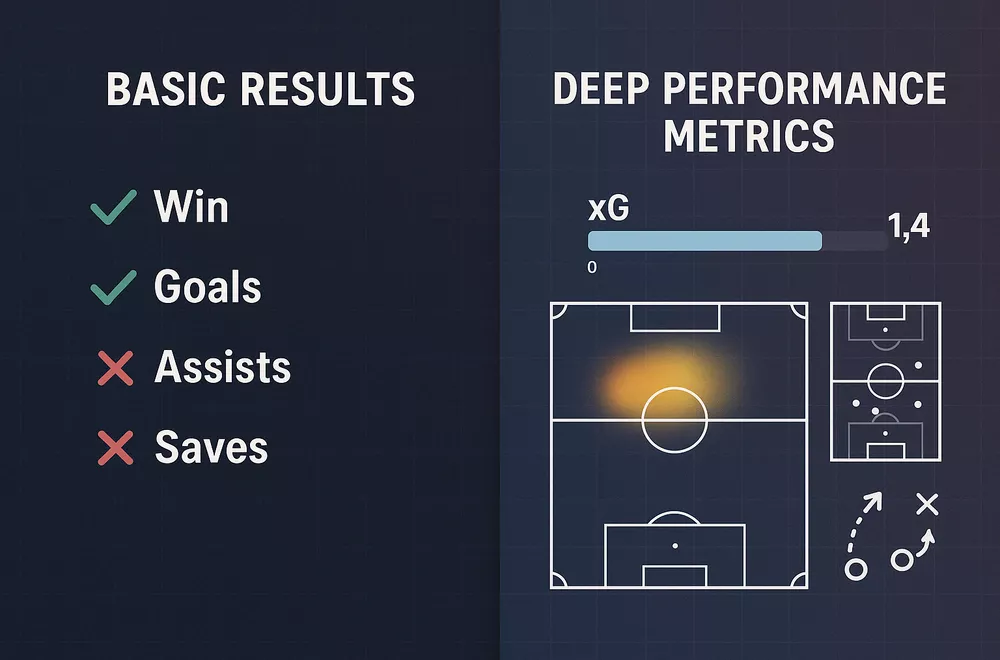
Form is the most cited and most misunderstood concept in sports betting. Everyone knows form matters—teams on winning streaks perform differently than those in crisis. But the surface-level interpretation of form as just counting recent wins leads to systematic errors that sharper bettors exploit ruthlessly.
The first principle is that sample size matters enormously. Three matches is essentially random. A team could face the three worst defenses in the league and look brilliant, or face title contenders and look terrible, without revealing much about their actual quality. Ten matches starts approaching useful sample size. Twenty matches gives you statistical confidence. The problem is that teams evolve continuously through injuries, tactical adjustments, and player form changes, so older matches become less relevant.
The balance point is usually looking at the last eight to twelve matches as primary data while keeping awareness of earlier season performance for context. This timeframe is recent enough that the squad composition and tactical approach remain reasonably consistent while providing enough matches to distinguish genuine patterns from noise.
Opposition quality adjustment transforms useless form analysis into valuable insight. That team won four of their last six matches—sounds great until you check that the wins came against the four worst teams in the league while they lost to the two decent opponents they faced. Their underlying quality hasn’t changed despite an impressive-looking record. Conversely, a team losing three straight might have faced the league’s top three teams and performed respectably in defeat. The raw results mislead.
Creating opposition-adjusted form metrics requires tracking not just results but performance against different quality tiers. How does the team perform against top-six opponents versus bottom-six opponents? Do they consistently beat teams they should beat while losing to stronger opposition, or are results unpredictable across the quality spectrum? This reveals whether a team’s form represents genuine quality level or schedule variance.
Expected goals over recent matches provides the cleanest form indicator because it’s less noisy than actual goals. A team creating 2.0 xG per match while allowing 0.8 xG against is performing excellently regardless of whether they’ve actually won those matches. Another team scores 2.5 goals per game but creates only 1.2 xG—they’re finishing unsustainably well and regression is coming. The xG tells you sustainable performance while goals tell you random outcomes.
Home versus away form splits reveal crucial context. Some teams are fortress-like at home but struggle away, making their overall form misleading when predicting specific matches. Others travel well but underperform at home, perhaps because they suit counter-attacking football that works better when opponents attack them. These splits often exceed what home advantage alone explains, suggesting tactical or psychological factors that persist.
The timing of form mattering within matches adds another layer. A team might have great results but consistently concede first before responding. This suggests potential vulnerability against opponents who defend leads well. Another team dominates first halves but fades in second halves—they might struggle against opponents with superior fitness or substitution options.
Form against similar playing styles matters for predicting specific matchups. A possession-based team might dominate opponents who sit deep but struggle against high-pressing teams. Their form record lumps all opponents together, hiding this crucial distinction. When you’re predicting a specific match, you care most about form against teams that play similarly to the upcoming opponent.
The danger is overweighting recent form relative to underlying quality. A relegation-level team might hit a hot streak and win four straight, but they’re still a relegation-level team. The hot streak is variance that will correct. Elite teams go through rough patches but remain elite. Form matters but not as much as casual analysis suggests—underlying quality drives long-term results, and form oscillates around that baseline.
Momentum is probably the most overrated concept in sports analysis. The idea that winning breeds winning and losing breeds losing has intuitive appeal but limited empirical support. Teams on winning streaks don’t win their next match at dramatically higher rates than their underlying quality predicts. The wins were often somewhat lucky, and regression to their actual quality level is coming regardless of whether they just won or lost.
The situations where momentum arguably matters are psychological—a team might genuinely gain confidence from a dramatic comeback win that changes their belief in close matches. Or a crisis might become self-reinforcing if player morale collapses and effort levels drop. These effects exist but are inconsistent and hard to quantify, making them poor primary factors for betting decisions.
Squad Depth and Rotation Impact
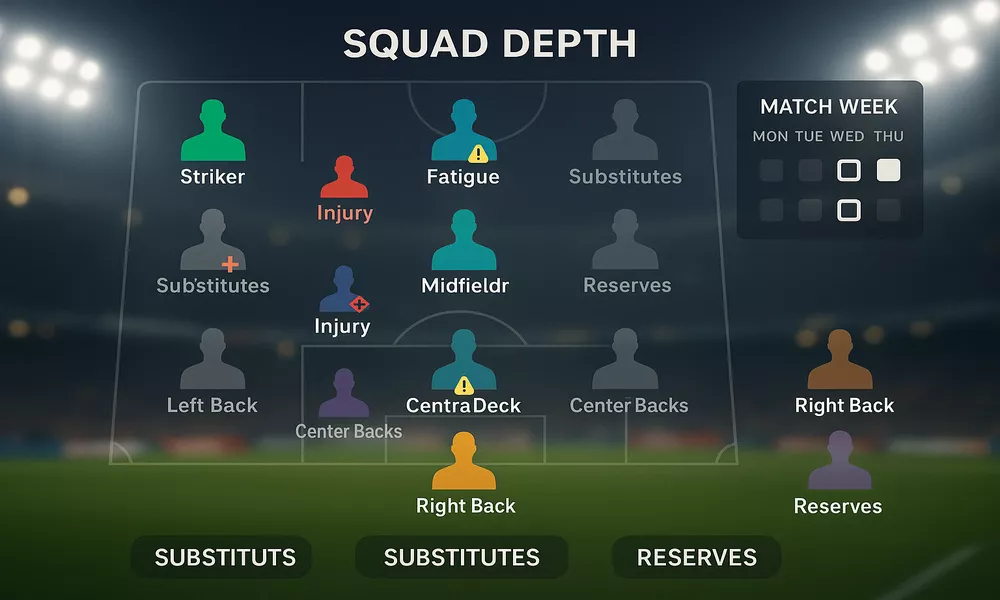
The starting eleven gets all the attention, but squad depth determines whether a team sustains performance across a season’s demands. This matters particularly for betting because fixture congestion and rotation create predictable performance dips that markets sometimes underprice.
European competition creates the most obvious congestion. Teams playing midweek Champions League or Europa League matches face recovery challenges that affect weekend domestic performance. The effect is measurable—teams typically perform worse in the league match immediately following European fixtures, particularly away from home. The combination of physical fatigue, mental strain, and often forced rotation weakens them by a margin that’s small but real.
The smart betting angle is identifying when this disadvantage is underpriced. If a strong team is heavily favored despite playing in Europe midweek while their opponent had full rest, that’s a potential fade opportunity. The market might not fully account for the fatigue factor, especially if the European match was demanding physically or went to extra time.
Squad depth quality determines whether rotation hurts performance significantly. Elite teams with genuinely strong squads can rotate five players and maintain quality. Mid-table teams rotating key players often see substantial performance drops because the backup players represent clear downgrades. This creates matchup opportunities when a team is forced to rotate heavily against an opponent at full strength.
Injury situations require deeper analysis than just noting who’s out. The question isn’t just whether a key player is injured but how that absence affects team shape and tactics. A creative midfielder’s injury might force a more direct playing style that doesn’t suit the remaining players. A center-back injury might require a less experienced replacement who makes the whole defense shakier. The ripple effects exceed the individual player’s quality.
Multiple injuries in the same position create compounding problems. If a team’s top two center-backs are injured and they’re playing their third and fourth choice, that’s a massive disadvantage even if each individual isn’t that important. The team has no depth to cover additional issues, and the quality drop from first to third choice is often exponential rather than linear.
Manager rotation patterns offer predictive value once you identify them. Some managers rotate extensively to keep players fresh and distribute minutes, while others prefer consistency and only rotate when forced. Understanding these tendencies helps predict lineups and therefore expected performance. A manager who rotates heavily before big matches is telegraphing that they’re prioritizing the upcoming match over the current one.
Cup matches create rotation opportunities where strong teams might field weakened lineups against supposedly inferior opposition. If you can identify these situations before the market fully prices them, value emerges on the underdog. The challenge is that team news often arrives late, and the market adjusts quickly once lineups are confirmed.
Age and fitness profiles of squads matter for how they handle congestion. A young, fit squad might actually handle fixture congestion better than a veteran team because recovery is easier. Conversely, veteran squads might have the experience to manage games more efficiently, expending less energy to achieve the same results. These factors are hard to quantify but influence sustainable performance over demanding periods.
The interaction between squad depth and tactical flexibility creates advantages that aren’t obvious. A team with multiple players capable of executing different roles can adjust tactics mid-match or across matches based on opposition. A team with specialists who can’t play alternative roles is predictable and limited. This flexibility or lack thereof becomes apparent when you analyze how teams respond to adversity or tactical challenges.
Weather conditions amplify squad depth importance. Extreme heat favors deeper squads who can maintain intensity through frequent substitutions. Cold or rain might favor experience over youth. These edges are marginal but real, and they compound with other factors to create meaningful advantages.
The key is building a mental model of each team’s squad depth situation rather than just noting headline injuries. Which teams can rotate freely without weakening? Which teams have critical dependencies on one or two players? Which positions are well-covered versus thin? This information informs predictions about how teams handle congested schedules or injury crises.
Tactical Analysis and Matchup Evaluation
Tactics often feel like abstract analyst nonsense, but tactical matchups genuinely influence outcomes in ways statistics alone don’t capture. The challenge is developing practical tactical understanding that informs betting rather than getting lost in formation minutiae that doesn’t matter.
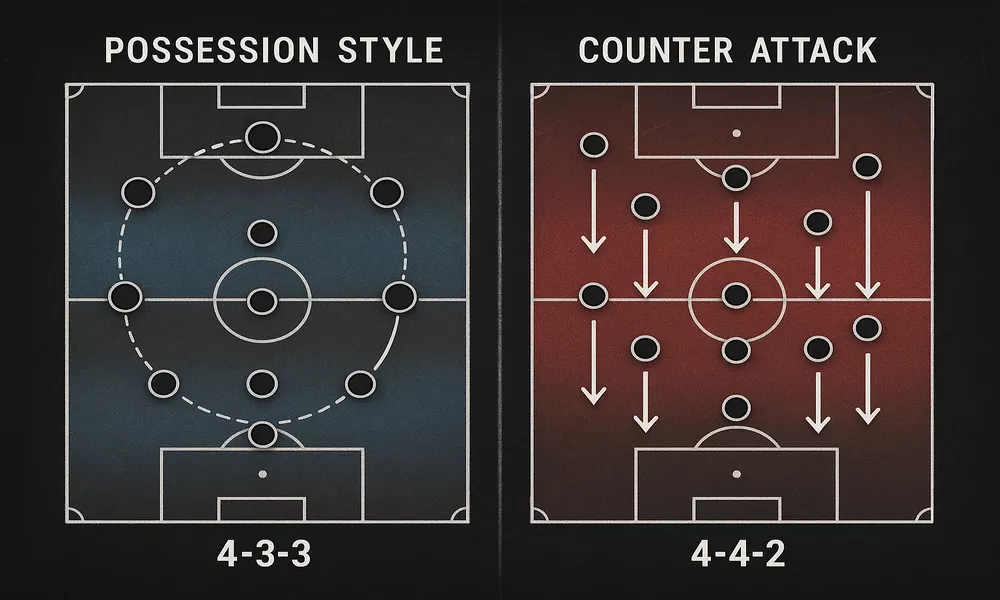
Formation numbers like 4-3-3 versus 4-4-2 matter less than how teams actually play within those structures. Two teams playing 4-3-3 can look completely different—one might play possession-based football with inverted wingers cutting inside, while the other plays direct football with traditional wingers providing width and crosses. The formation is the same but the tactical approach is unrelated.
Playing style matchups create the primary tactical edges. Possession-based teams that build patiently struggle when opponents sit deep and compact, forcing them to break down organized defenses. These same possession teams often dominate aggressive pressing teams who leave space behind their defensive line. Meanwhile, counter-attacking teams thrive against opponents who attack but struggle against teams that sit deep and don’t give them transition opportunities.
Understanding each team’s preferred style and how it matches against the opponent’s approach predicts expected performance better than overall quality metrics sometimes do. An inferior team playing their ideal tactical matchup can outperform expectations, while a superior team facing an awkward matchup might underperform. The market doesn’t always adjust fully for these dynamics.
Pressing intensity and defensive structure create specific matchups. High-pressing teams expend enormous energy forcing mistakes in opponent buildup. Against teams comfortable playing out from the back, this pressing might fail while exhausting the pressing team for later in matches. Against teams uncomfortable under pressure, the pressing generates turnovers and chances. The matchup determines effectiveness.
Width versus central focus creates opportunities to exploit. Teams that overload central areas struggle against opponents strong in central defense but weak wide. Teams focused on wing play find success against defenses that protect the middle but leave space out wide. Identifying these mismatches before the market prices them fully creates betting value.
Defensive line height affects multiple match dynamics. Teams playing high defensive lines are vulnerable to pace in behind but strong at compressing space and winning the ball high. Against opponents with limited pace, the high line dominates possession and territory. Against fast counter-attacking teams, the high line is exposed repeatedly. This single tactical choice can determine match outcomes.
Managerial tactical flexibility varies enormously. Some managers adjust their approach significantly based on opposition, while others impose a consistent style regardless of opponent. Teams facing flexible managers are harder to predict because the tactical setup might surprise them. Teams facing predictable managers can prepare more effectively.
The in-match tactical battle matters for live betting but also informs pre-match analysis. Which manager is more likely to make effective adjustments when their initial plan isn’t working? Which team has the tactical intelligence to recognize and exploit opponent weaknesses mid-match? These factors are subtle but real.
Set piece preparation separates well-coached teams from mediocre ones. Teams that train set pieces extensively create goals from corners and free kicks at higher rates than their open play quality would predict. Teams that neglect set piece preparation concede from them disproportionately. This coaching quality shows up in the data over sufficient samples and creates consistent edges.
Transition defense and offense—how teams handle the moment possession changes—often determines high-level matches. Elite teams transition quickly from defense to attack, catching opponents disorganized. They also transition quickly from attack to defense, preventing opponents from doing the same. Mediocre teams are slow in transition, allowing opponents to set up defensively or to counter effectively.
The practical application is identifying specific mismatches before matches based on tactical profiles. That possession team faces an opponent who defends deep excellently but is vulnerable in transition. Can the possession team exploit the transition weakness, or will they get frustrated trying to break down the defense? Your statistical model won’t answer this, but tactical understanding will.
Psychological and Motivational Factors

Psychology in sports betting exists on a spectrum from genuine predictive factors to narrative nonsense. The challenge is distinguishing which psychological elements actually affect performance versus which make compelling stories but don’t predict outcomes reliably.
Championship and relegation pressure genuinely affects performance, though not always in the direction casual analysis assumes. Teams fighting for the title often raise their performance level slightly through increased focus and determination. The effect is real but modest—maybe worth a tenth of a goal in xG terms. Teams fighting relegation show more variable responses. Some battle desperately and overperform their talent. Others collapse under pressure and stop performing.
The key is identifying which teams respond well to pressure versus which fold. Track record helps—teams that have escaped relegation battles previously or won titles under pressure have proven psychological resilience. Teams that bottled similar situations before might do so again. This isn’t deterministic but provides probabilistic information the market might not fully price.
Derby matches produce genuine psychological differences. Players care more about beating their local rivals. Managers feel additional pressure. The matches are often tactical scraps where normal playing patterns break down. Historically, home advantage increases slightly in derbies because crowd impact intensifies. These factors are real but modest—maybe worth a quarter goal in expected outcome.
The betting angle is that casual bettors overvalue derbies, creating potential value on the opposite side of public sentiment. If everyone’s piling onto the emotional narrative that Team A must win this derby, the odds might become inefficient the other way. The derby matters somewhat, but not as much as public perception suggests.
Revenge narratives get endless media attention but have almost no predictive value. That player is facing his former team and wants to prove them wrong—compelling narrative, irrelevant to outcome. That manager was sacked by this club and wants revenge—interesting storyline, doesn’t change the tactical matchup or quality differential. Ignore these narratives for betting purposes unless you enjoy entertainment more than profit.
End-of-season motivation splits create significant edges. Teams with nothing to play for demonstrably underperform teams fighting for European places or against relegation. The effect is pronounced enough that it shows up clearly in data—teams on beach holiday mode often lose form dramatically. Betting against them when they face motivated opposition offers systematic value.
The timing matters within seasons. Early season, all teams are motivated. Mid-season, form and quality dominate. Late season, motivation differentials create some of the clearest edges in football betting. This doesn’t mean blindly backing motivated teams—you still need them to be decent—but it’s a significant tiebreaker when other factors are balanced.
New signing impact is partly psychological. A marquee signing boosts team morale and fan optimism, which might translate to slightly improved performances through confidence and energy. The effect is temporary and often overstated, but it exists for the first few matches. Conversely, failed signings who flop publicly can damage team morale. These impacts are secondary to the player’s actual quality but not zero.
Managerial relationship with the squad creates psychological context. When a manager loses the dressing room, player effort levels visibly drop. They’re not trying as hard, not fighting for loose balls, not executing tactical instructions properly. This manifests as performance collapse that statistics struggle to explain. Identifying these situations early creates betting opportunities before they’re obvious to everyone.
Confidence after significant results cuts both ways. A dramatic comeback win might boost confidence meaningfully, improving performance in subsequent matches. A devastating loss might damage confidence, particularly if it revealed fundamental weaknesses. These effects are real but temporary and hard to quantify, making them useful as secondary factors not primary drivers.
The honest assessment is that psychological factors matter less than most bettors think. They make compelling narratives that explain past results but predict future results poorly. Team quality, form, tactical matchups, and squad availability matter more. Use psychology as tiebreakers when quantitative factors are balanced, not as primary decision drivers. The exception is when psychological factors are extreme—a team completely demoralized after a string of disasters is genuinely weakened beyond what statistics show.
Building a Practical Team Analysis Framework
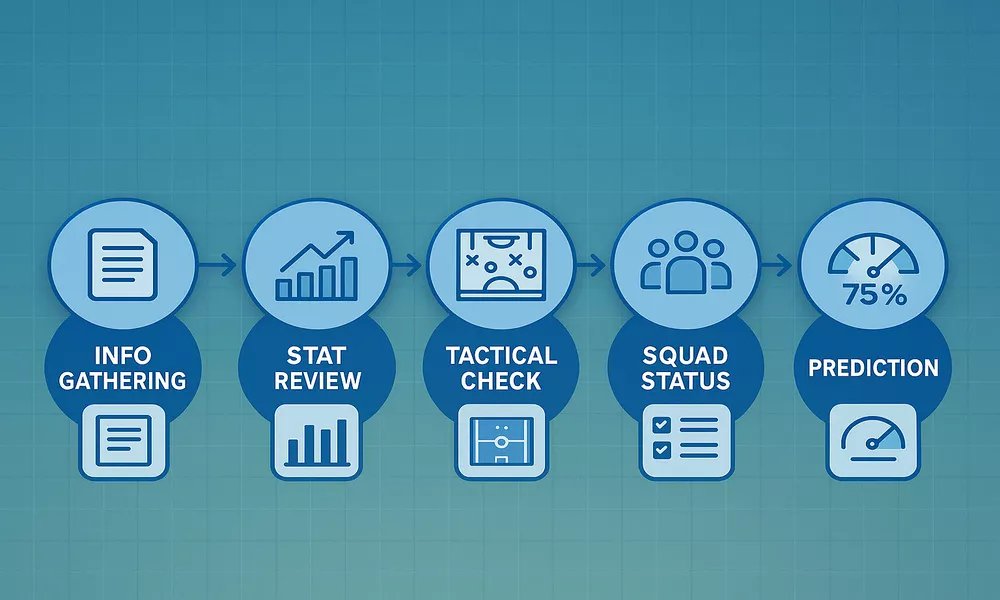
Theory means nothing without systematic application. You need a repeatable process for analyzing teams before matches that incorporates all these factors without descending into analysis paralysis where you’re considering so many variables you never actually place a bet.
The framework starts with gathering necessary information before doing any analysis. Collect recent match results and statistics for both teams, ideally from the last ten matches. Note any significant injuries or suspensions. Check fixture congestion—did either team play midweek? Identify the tactical approach each team typically uses. This information gathering should take ten to fifteen minutes maximum once you’ve established efficient sources.
Statistical review comes next. Calculate or find each team’s xG for and against over recent matches, adjusted for opposition quality if possible. Check actual goals scored and conceded to identify teams over or underperforming their xG. Look at home-away splits for both teams to understand whether this specific venue matters. Compile these numbers into a simple comparison that shows objective performance levels.
Tactical matchup assessment requires sport-specific knowledge but doesn’t need to be elaborate. Ask yourself: does one team’s style create problems for the other’s approach? Are there specific strengths versus weaknesses that suggest an advantage? Would you expect the match to be open and high-scoring or cagey and low-scoring based on playing styles? This takes experience to do well but becomes intuitive once you’ve watched enough football.
Squad situation check prevents betting into obvious disadvantages. Verify that key players are available and that neither team is rotating heavily due to upcoming important matches. Check for accumulation of minor injuries that might weaken depth even if starters are available. This due diligence catches situations where your statistical analysis is sound but circumstantial factors override normal expectations.
Motivation and psychology get minimal weight unless factors are extreme. Note if one team is fighting relegation while the other is comfortably mid-table. Check if it’s the final match day where motivations are maximally divergent. Otherwise, assume both teams are trying reasonably hard and focus on quality and tactical factors.
Synthesizing all factors into a prediction requires judgment that improves with practice. You’re not mechanically weighting factors—you’re building a holistic picture of expected performance. Maybe Team A looks superior statistically but faces a terrible tactical matchup and is missing two key players. Team B’s chances are better than the raw numbers suggest. This synthesis is where experience and football knowledge matter most.
The output shouldn’t be a precise score prediction because those are random. Instead, predict a probability distribution—maybe Team A has forty-five percent win probability, draw is thirty percent, Team B is twenty-five percent. Or predict expected goals for each team, from which you can derive probabilities for various markets. This probabilistic thinking prevents false precision while maintaining analytical rigor.
Comparing your probabilities to bookmaker odds reveals value. If you assess Team A at forty-five percent win probability but bookmaker odds imply thirty-eight percent, that’s significant value. The gap might reflect information you have that the market hasn’t fully incorporated, or biases in how the market prices certain situations. Either way, the positive expected value justifies a bet.
Time management matters practically. You can’t deeply analyze every match, so prioritize. Focus on leagues and teams you know well where your knowledge advantage is largest. Skip matches where information is scarce or where you have no particular insight. Quality of analysis beats quantity of bets overwhelmingly.
Record keeping closes the loop by revealing which parts of your analysis actually work. Track not just whether bets win but whether your predicted probabilities calibrate correctly over large samples. If you consistently predict sixty percent win probability on bets that win only fifty percent of the time, your analysis is systematically overconfident. Adjust accordingly and your predictions improve.
The framework evolves through iteration. You’ll discover certain factors matter more than you thought while others that seemed important prove irrelevant. Maybe you realize goalkeeper quality matters more than you accounted for, or that managerial experience in big matches predicts better than you expected. The framework isn’t static—it’s a living process that improves as you learn what actually predicts outcomes in your focused betting markets.
