
2026 Sports Prediction Software: Professional Tool Comparison
 Available in US
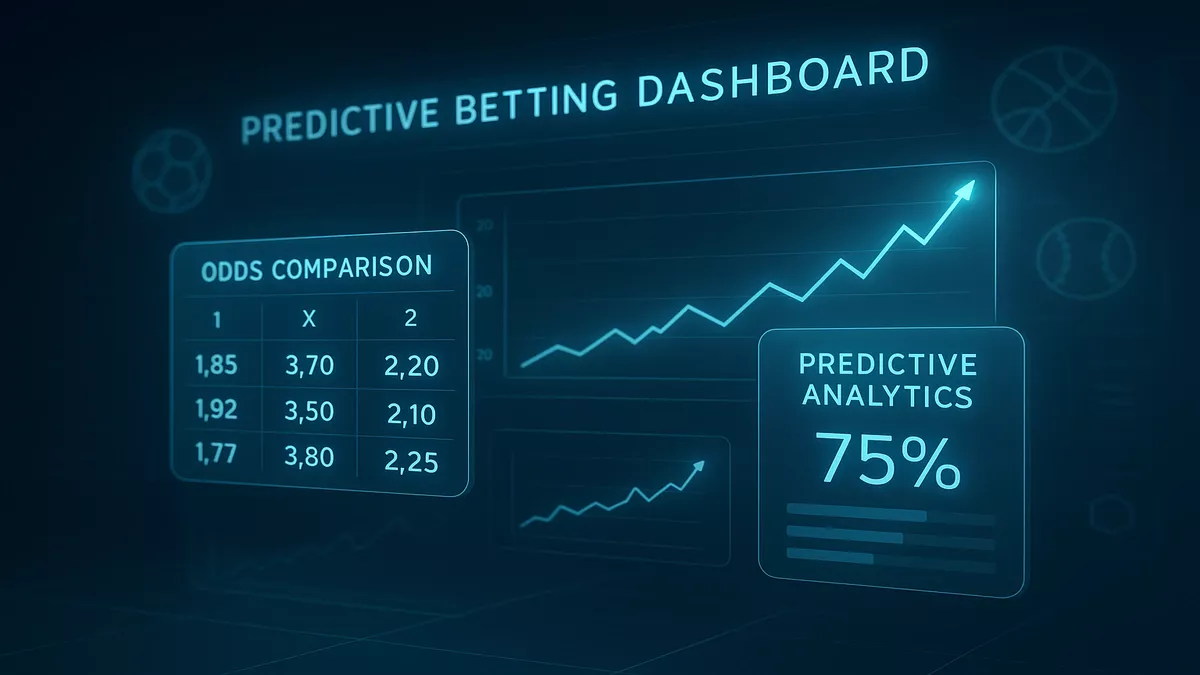 Available in US
The right tools don’t make you a winning bettor, but they make the work possible. Think of prediction tools like a professional chef’s knives they won’t turn you into Gordon Ramsay overnight, but trying to work without them means you’re handicapping yourself unnecessarily. The difference is that while everyone knows they need a knife to cook, most bettors don’t realize how much valuable data and analysis capability they’re missing by relying solely on bookmaker sites and basic statistics.
The betting tool landscape has exploded over the past decade. You’ve got everything from free statistical databases that would have cost thousands in the past, to AI-powered prediction engines that process millions of data points instantly, to simple tracking spreadsheets that reveal where your analysis actually makes money versus where you’re fooling yourself. The challenge isn’t finding tools it’s knowing which ones actually add value versus which are just impressive-looking distractions.
Here’s what most guides won’t tell you: expensive doesn’t mean better, and more features don’t equal more profit. Some of the most successful bettors I know use three or four carefully chosen free tools plus a basic spreadsheet. Meanwhile, plenty of losing bettors pay hundreds monthly for premium services that promise the world but deliver mediocrity wrapped in fancy dashboards. The key is matching tools to your specific needs rather than collecting them like trading cards.
This guide cuts through the noise. We’ll look at statistical databases that provide the raw material for analysis, odds comparison platforms that ensure you’re always getting maximum value, AI prediction services worth considering, tracking tools that transform chaotic betting into measured strategy, and how to build a tool stack that actually improves your bottom line rather than just making you feel professional.
Software Benchmark: Automated Value Detection vs. Manual Analysis
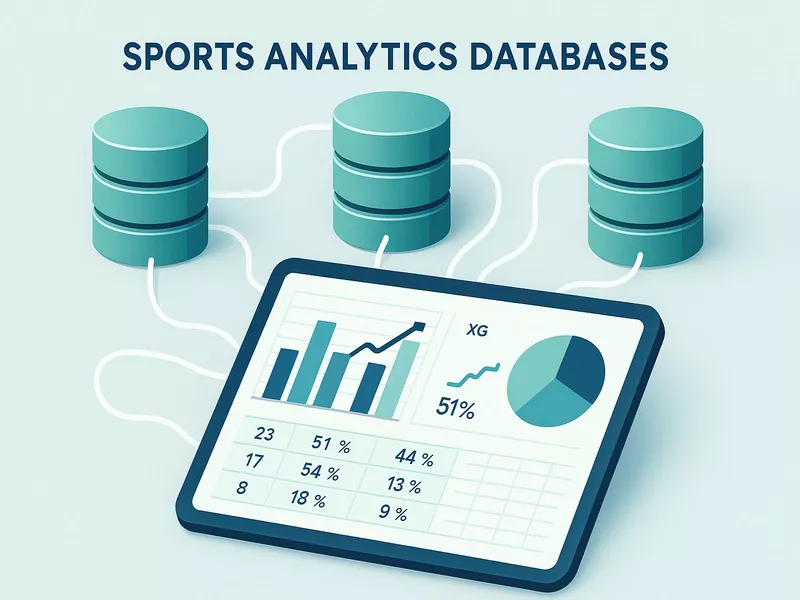
Raw data is the foundation of informed prediction, and modern statistical databases have democratized access to information that was previously locked behind paywalls or simply didn’t exist publicly. The challenge is that these platforms can overwhelm you with metrics if you don’t know what you’re looking for.
FBref has become the gold standard for football statistics, and for good reason. It’s free, comprehensive, and most importantly, it includes expected goals data alongside traditional metrics. You can drill down into individual matches or aggregate across entire seasons, compare players or teams, and access underlying performance indicators that reveal far more than simple win-loss records. The site pulls data from StatsBomb, which uses sophisticated tracking to calculate xG for every shot based on location, defensive pressure, assist type, and body part used.
What makes FBref genuinely useful is how it organizes information for comparison. Want to see which teams overperform their expected goals consistently? A few clicks gets you there. Curious about a specific player’s shot locations and conversion rates? It’s all visualized clearly. The danger is spending hours exploring interesting tangents that don’t actually improve your betting decisions. Discipline matters go in with specific questions and resist the rabbit holes.
Basketball Reference serves a similar function for NBA and basketball generally. Decades of data spanning every imaginable metric, from basic points and rebounds to advanced stats like true shooting percentage, player efficiency rating, and on-off court impact. The historical depth is remarkable you can compare current players to past eras, identify long-term trends, and see how rule changes affected playing styles.
The advanced stats section is where value hides for bettors. Raw points per game tells you less than points per 100 possessions, which adjusts for pace. Field goal percentage matters less than true shooting percentage, which accounts for three-pointers and free throws properly. Defensive rating adjusted for opponent strength reveals whether a team’s defensive reputation is real or schedule-dependent. These aren’t just interesting numbers they predict future performance better than traditional stats.
Baseball Savant transformed how serious baseball bettors approach the sport. Pitch-by-pitch data including velocity, spin rate, movement, location, and outcome creates a granular picture of performance that simple batting averages hide. You can see which pitchers get hit hard but get lucky on batted ball outcomes versus which pitchers genuinely suppress quality contact. Exit velocity and launch angle data reveal which hitters are due for positive or negative regression based on their underlying quality of contact.
The statcast data particularly shines for props betting. Trying to predict whether a specific batter gets a hit? Look at his quality of contact metrics recently, check the opposing pitcher’s ability to limit hard contact, factor in ballpark effects, and you’ve got a more informed opinion than just looking at batting averages. This edge compounds across dozens of bets even if individual game variance remains high.
Opta Sports powers many professional analytics but doesn’t provide direct public access the way these other platforms do. However, sites and apps that use Opta data like WhoScored or SofaScore give you access to portions of their database. The value is in detailed match events: passes attempted and completed broken down by field zone, defensive actions, pressing intensity, and dozens of other metrics that describe how matches unfolded beyond just the score.
The free versus paid question comes up constantly with statistical databases. The honest answer is that free sources provide more than enough data for profitable betting. The paid versions offer convenience better interfaces, more automation, data delivery formats that save time. But they don’t provide fundamentally different information that suddenly unlocks profit. If you’re not profitable using free data, paying for premium access won’t fix the problem. Your analysis and interpretation matter more than data granularity.
The real skill is knowing which metrics to prioritize for your specific betting focus. If you’re predicting football match winners, you need expected goals, rest days, home-away splits, and recent form against similar opposition. If you’re betting basketball totals, you need pace stats, efficiency metrics, opponent-adjusted ratings, and scheduling factors. Time spent learning what predicts outcomes in your chosen market beats time spent exploring every available metric.
Integration between tools amplifies value. You might pull xG data from FBref, check odds across bookmakers on OddsPortal, run the numbers through your own spreadsheet model, then verify recent team news on a dedicated sports app. This workflow using multiple specialized tools beats trying to find one magical platform that does everything mediocrely.
Odds Comparison and Value Finding Platforms
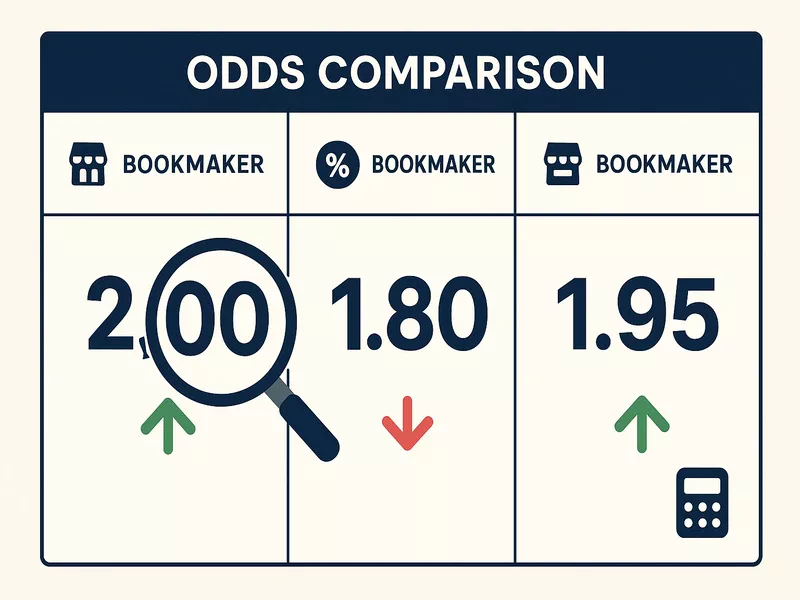
Getting the best odds available might seem like a minor detail, but it’s the difference between long-term profit and loss for many bettors. A tiny edge in odds, repeated across hundreds of bets, compounds into substantial profit or prevents significant losses. Odds comparison sites make this optimization trivial rather than tedious.
OddsPortal sits at the top of most serious bettors’ tool lists for good reason. It aggregates odds from dozens of bookmakers across every major sport and market, updating in real time as lines move. The interface is clean, the data is reliable, and most importantly, it shows you historical odds movements so you can see where lines started, where they moved, and what that might indicate about sharp action.
The value isn’t just finding the best current odds that’s table stakes. The real insight comes from tracking how odds evolve. When a line moves from 2.00 to 1.80 despite no obvious news, professional money is likely influencing the market. OddsPortal displays this movement visually, letting you identify potential steam moves or market overreactions you can exploit. You’re seeing the collective wisdom of thousands of bettors expressed through price discovery.
Historical odds are particularly valuable for backtesting your strategies. Think you’ve found an edge on home underdogs in a specific league? Pull historical odds for that market, test your hypothesis against past data, and see whether your approach would have been profitable. This prevents you from discovering unprofitability one bet at a time with real money.
OddsChecker provides similar functionality with a slightly different interface that some prefer. The key difference is their coverage of certain niche markets and bookmakers. If you’re betting obscure leagues or prop markets, one platform might have coverage the other lacks. Having both bookmarked costs nothing and ensures you’re not missing opportunities.
The reality of odds comparison is that you need accounts at multiple bookmakers to exploit it properly. Finding the best odds matters little if you can’t actually place the bet at that book. Professional bettors maintain accounts at five to ten bookmakers minimum, sometimes dozens. This creates friction managing multiple accounts, meeting varying deposit requirements, dealing with different interfaces but the profit edge justifies the hassle.
Bookmaker selection strategy matters. Some books are sharp, meaning they quickly adjust lines based on informed action. Others are soft, catering to recreational bettors and occasionally offering exploitable lines. You want accounts at both. Sharp books like Pinnacle often have the best odds and highest limits, making them your primary betting destination. Soft books occasionally offer huge value on specific markets where they’ve mispriced lines, providing opportunities for significant bets before they correct.
Some bookmakers limit or ban winning players aggressively. This is the dirty secret the industry doesn’t advertise. Consistently beat the closing line and show long-term profit, and certain books will restrict your stakes to pennies or close your account entirely. Betting exchanges and sharp bookmakers tolerate winning players because they want their liquidity and market efficiency. Soft recreational books don’t. Plan accordingly by spreading action across multiple accounts and keeping detailed records of who’s restricted you.
Line shopping isn’t just about comparing odds at a single moment it’s about timing. Odds fluctuate based on news, betting volume, and bookmaker adjustments. Sometimes the best odds appear early when lines first open. Other times, waiting until just before the event starts gets you better value after overreactions have corrected. Odds comparison platforms let you set alerts for specific price thresholds, notifying you when value appears.
Value betting calculators integrated into comparison sites help quantify edges quickly. Input your assessed probability, scan available odds, and the calculator shows expected value for each bookmaker. This removes guesswork and emotional decision-making. If no bookmaker offers positive expected value, there’s no bet regardless of how confident you feel. If multiple books offer positive EV, you can split stakes proportionally to exploit multiple opportunities.
The mobile experience matters more than it should. A significant portion of betting happens on phones, either because you’re placing live bets while watching matches or because you’re taking advantage of value that appears briefly before markets correct. Odds comparison sites with functional mobile interfaces or dedicated apps let you act quickly rather than missing opportunities while wrestling with desktop versions on small screens.
AI and Machine Learning Prediction Services
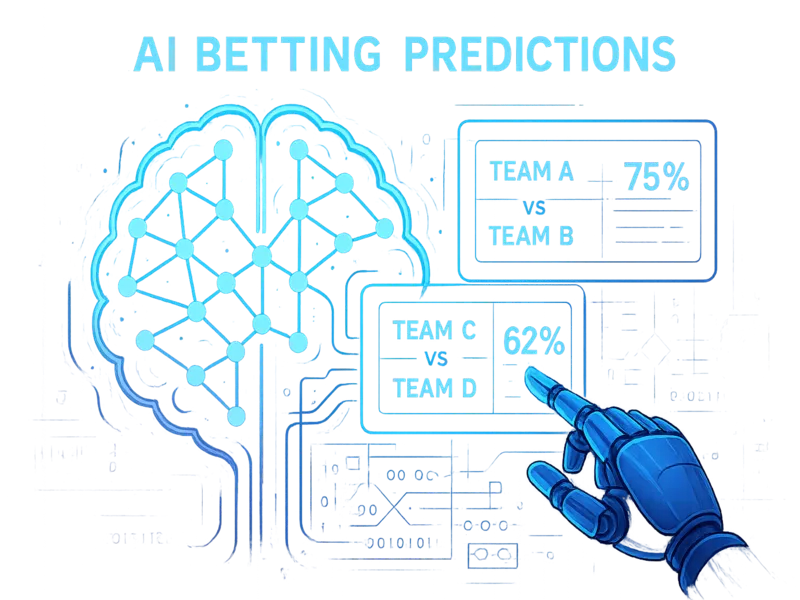
Artificial intelligence in betting prediction has moved from science fiction to practical reality over the past few years. The question isn’t whether AI can help it clearly can but rather which services deliver genuine value versus which are glorified random number generators wrapped in impressive-sounding marketing.
Sports AI represents the serious end of the AI prediction market. Their models process massive datasets including historical results, advanced metrics, weather conditions, referee tendencies, lineup data, and market odds to identify betting opportunities. The track record they publish shows modest but consistent profitability across major sports, which is exactly what legitimate prediction models should deliver. No wild claims of seventy percent accuracy, no promises of getting rich quick, just consistent positive expected value over large samples.
What separates credible AI services from nonsense is transparency about methodology and limitations. Sports AI explains that their models work better in certain markets than others, that variance means losing streaks happen even with positive EV, and that their edge is small but statistically significant over thousands of bets. They publish full betting histories showing winners and losers rather than cherry-picking results. This honesty is refreshing in an industry full of touts promising miracles.
The subscription model for AI predictions creates aligned incentives when structured properly. Services that charge monthly regardless of results have less motivation to deliver quality they’re selling hope rather than value. Services that offer free trials or money-back guarantees based on performance metrics have more skin in the game. Still, even legitimate services can hit extended rough patches due to variance, so evaluate over multiple months minimum before judging effectiveness.
BetIdeas takes a slightly different approach, using AI to identify value bets across multiple sports and markets rather than predicting outcomes directly. Their algorithm analyzes historical odds movements, current market prices, underlying team performance, and systematic biases to flag opportunities where bookmaker odds diverge from their calculated fair value. It’s essentially automated line shopping combined with predictive modeling.
The advantage of value-focused AI is that it doesn’t require perfect outcome prediction. If the AI identifies bets where the true probability is fifty-five percent but the market implies fifty percent, those bets have positive expected value even though they’ll still lose forty-five percent of the time. Over hundreds of such bets, profit emerges from the cumulative edge rather than any single prediction being brilliant.
Leans.ai has built a reputation among sharper bettors for transparent, data-driven predictions with documented long-term results. Their model focuses heavily on closing line value as a success metric, recognizing that short-term win-loss records are noise but consistently beating the closing line indicates genuine skill. The service emphasizes education alongside picks, helping subscribers understand why the AI favors certain bets rather than treating it as a black box.
The reality check about AI prediction services is that none of them eliminate the need for your own analysis. They’re tools that process information faster and without emotional bias than humans can, but they’re not infallible. Markets evolve, bookmakers adapt, and edges that existed last season might disappear this season. The best approach uses AI predictions as one input among several rather than blindly following them.
Combining AI with human judgment often works better than either alone. The AI might flag a bet based on historical patterns, but you notice the team’s best player is injured and hasn’t been factored into the model yet. Or the AI might pass on a bet while you recognize a tactical matchup it can’t quantify properly. The synthesis of algorithmic pattern recognition and contextual human understanding beats pure algorithms or pure intuition.
Cost-benefit analysis matters. Premium AI services might run fifty to two hundred dollars monthly. For that subscription to make sense, it needs to improve your results by more than the subscription cost. If you’re betting small amounts recreationally, the service needs to be either very cheap or dramatically improve your win rate to justify the expense. If you’re moving serious money, even a one or two percent improvement in ROI pays for subscriptions many times over.
The verification challenge is that most AI services don’t allow true independent verification of their claimed results. They publish records on their own sites, but you can’t audit whether they cherry-picked sports or excluded bets that didn’t fit their narrative. Third-party tracking sites where tipsters can’t manipulate results provide more trustworthy performance data. Before committing to any paid service, demand verified results from independent sources covering meaningful time periods.
Tracking and Performance Analysis Tools
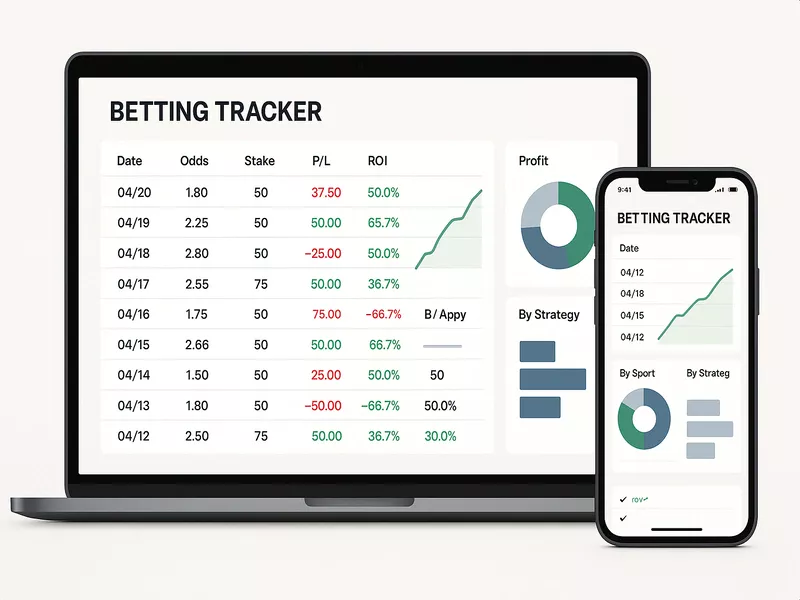
You can’t improve what you don’t measure, and betting without detailed tracking is like running a business without accounting. You might win sometimes, but you have no idea whether your process works or if you’re just getting lucky. Tracking tools transform gambling into measured strategy by revealing which of your approaches actually make money.
Bet tracking apps range from simple to sophisticated, but the core function remains constant: record every bet with enough detail to analyze patterns later. At minimum, you need date, sport, league, bet type, selection, odds, stake, and outcome. Better tracking includes why you made the bet, your confidence level, relevant statistics that informed the decision, and any special circumstances like injuries or weather.
Pikkit and similar dedicated betting apps make tracking relatively painless with mobile-friendly interfaces and automatic result updates. You log a bet in seconds, the app pulls final scores automatically, and your running profit-loss updates in real time. The psychological value of seeing results quantified rather than relying on fuzzy memory can’t be overstated. That nagging feeling that you’re down money becomes concrete knowledge of exactly how much and on what types of bets.
The analysis features separate mediocre tracking from genuinely useful tools. Any app can log wins and losses. The valuable ones break down performance by sport, league, bet type, odds range, day of week, home versus away, and any other category relevant to finding edges. You might discover you’re profitable on underdogs but lose money on favorites, or that your basketball analysis works while your football bets fail. These insights are invisible without systematic tracking.
ROI calculations matter more than raw profit figures. Winning five hundred dollars sounds good until you realize you wagered ten thousand to get there, for a five percent return. Breaking even after wagering twenty thousand means your picks were no better than coin flips. The app should calculate return on investment automatically, letting you compare the effectiveness of different approaches despite varying stake amounts.
Closing line value tracking separates serious analytics from basic record keeping. The closing line represents the market’s most efficient assessment of true probability. If you consistently get better odds than the closing line, you’re demonstrating skill regardless of short-term results. Apps that track CLV either manually or automatically give you insight into whether your process works independent of variance. Positive CLV over hundreds of bets predicts long-term profitability even if you’re currently on a losing streak.
Spreadsheet solutions offer ultimate flexibility for bettors who want complete control. Google Sheets or Excel let you design exactly the tracking system you need with whatever categories and calculations matter to your specific approach. The downside is manual data entry and result updating, which creates friction that makes consistent tracking less likely.
The minimal viable tracking system requires only a spreadsheet with columns for date, description, odds, stake, profit-loss, and running balance. Add rows for each bet, include totals at the bottom, and you’ve got functional tracking. From there, expand gradually by adding columns for sport, league, bet type, and your confidence level. Build pivot tables to analyze performance by category. The sophistication grows as your needs become clearer.
Bankroll management integration turns tracking from historical record into active tool. Your tracker should show current bankroll, calculate recommended bet sizes based on edge and confidence using Kelly Criterion or similar formulas, and alert you when you’re deviating from your stated strategy. This prevents emotional decisions like chasing losses with oversized bets or getting conservative after wins when you should maintain consistent stake sizing.
The discipline factor matters more than the specific tool. Fancy software means nothing if you don’t log every single bet consistently. The bettor using a basic spreadsheet religiously outperforms the bettor with premium software who only tracks their bigger bets or forgets to log losers. Choose whatever system reduces friction enough that you’ll actually use it every time.
Privacy considerations are worth mentioning. Betting tracking apps store your betting history, which includes potentially sensitive financial information. Use services with strong security, enable two-factor authentication, and read privacy policies to understand how your data might be used. Some bettors prefer local spreadsheets specifically to maintain complete control over their information rather than trusting third-party servers.
Building Your Optimal Tool Stack
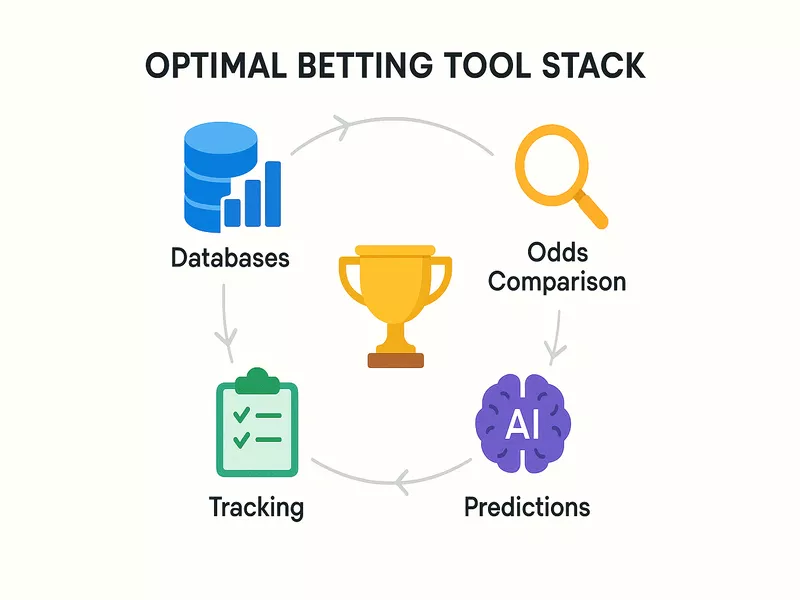
The perfect tool stack varies by individual, but certain principles apply universally. You want coverage of essential functions without redundancy, integration between tools where possible, and a workflow that feels natural rather than forced. Complexity without purpose just creates busy work that doesn’t improve results.
Start with the bare minimum and expand only when you identify specific gaps. Every serious bettor needs statistical data for their chosen sport, odds comparison across bookmakers, and basic bet tracking. That’s three tools maybe FBref plus OddsPortal plus a spreadsheet. This foundation handles probably eighty percent of what matters for profitable betting.
From there, additions should solve specific problems you’ve encountered. Maybe you realize you need better live statistics during matches, so you add SofaScore or similar. Perhaps you want to track line movements more systematically, so you add a service that monitors odds changes and alerts you to significant moves. Each tool joins your stack because it fills a genuine need, not because it seems potentially useful.
Integration multiplies effectiveness. Tools that work together smoothly through data export-import, shared formats, or actual API connections reduce friction and save time. If you can export statistical data from one platform, import it into your spreadsheet model, then pull predicted outcomes into your tracking system, you’ve built an efficient workflow. When every step requires manual data entry and format conversion, you’re losing time and introducing error opportunities.
Mobile versus desktop considerations depend on your betting style. If you primarily analyze matches hours or days in advance from your computer, desktop-focused tools work fine. If you’re often betting on-the-go or taking advantage of live betting opportunities, mobile functionality becomes critical. Many successful bettors use both desktop for deep analysis and mobile for execution and monitoring.
Budget allocation makes sense once you’re demonstrably profitable. Spending money on premium tools while you’re still learning or breaking even is backwards. Prove your process works using free tools, then invest in paid services that save time or provide incremental edges. The return on investment calculation is straightforward: does this tool improve my results by more than it costs?
Beware tool accumulation that substitutes for actual analysis. Having twelve different prediction services doesn’t make you a better bettor if you’re just averaging their picks without understanding the reasoning. Similarly, tracking ten different advanced metrics for every bet might feel professional while actually just creating paralysis by analysis. Simplicity with consistency beats complexity applied inconsistently.
The workflow matters as much as individual tools. Establish a routine for how you use your stack maybe you check odds movements first thing daily, review statistical updates for matches you’re considering, run your analysis process, identify value bets, check odds across bookmakers, place bets at optimal prices, log everything in your tracker. This systematization removes decision fatigue and ensures consistent application of your methodology.
Regular evaluation of your tool stack prevents zombie subscriptions and abandoned systems. Every few months, audit what you’re actually using versus what you’re paying for or maintaining. That premium service you thought would be useful but never actually check? Cancel it. The elaborate spreadsheet you built but find too cumbersome to update? Simplify it or replace it. Your tools should serve your process, not create work for its own sake.
The ultimate goal is a tool stack that feels invisible tools working so smoothly that you focus on analysis and decision-making rather than wrestling with software. When you’re spending more time managing tools than using them, something’s wrong. Simplify ruthlessly. The best tool is often the one you’ll actually use rather than the one with the most features.
Free tools dominate among professional bettors not because they’re cheap but because they’re sufficient. The data exists publicly, odds comparison is free, spreadsheets are free or inexpensive. Spending money doesn’t create edges smart analysis of available information creates edges. Premium tools can save time and provide convenience, but they rarely provide fundamentally unique information that unlocks profit.
The human factor remains dominant regardless of tools. Software doesn’t replace thinking. Algorithms don’t eliminate the need for sport-specific knowledge. Databases don’t automatically tell you which metrics matter for predicting outcomes. Tools amplify human capabilities pattern recognition, calculation speed, data organization but they don’t replace judgment, discipline, or systematic thinking. The bettor matters far more than the toolkit.
Using software to monitor odds is great, but combining it with a solid live betting predictions guide will maximize your edge.
Stay ahead of the game with Bet Prediction Daily, your source for professional sports wagering insights.
